

What is Single Stage Pump
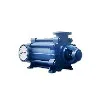
A single-stage pump is a type of centrifugal pump designed to impart energy to a fluid within a single rotating impeller. In this configuration, the pump has only one impeller mounted on a shaft, and the fluid is directed through the impeller to increase its kinetic energy. As the fluid gains velocity, the kinetic energy is then converted into pressure as it exits the impeller. Single-stage pumps are typically employed in applications where moderate to low-pressure requirements are sufficient, such as in residential water supply systems, irrigation, and various industrial processes. While single-stage pumps are simpler in design, they are well-suited for scenarios where a cost-effective and straightforward solution is needed without the need for higher pressure capabilities provided by multistage pumps.
Advantages of Single Stage Pump
Simplicity and cost-effectiveness:Single-stage pumps are simpler in design compared to multistage pumps, consisting of only one impeller. This simplicity makes them cost-effective to manufacture, install, and maintain. They are often favored in applications where a straightforward pumping solution is sufficient.
Ease of maintenance:With fewer components and a straightforward design, single-stage pumps are generally easier to maintain. Maintenance tasks such as inspections, repairs, and replacements can be more straightforward and less time-consuming compared to complex multistage pump systems.
Suitability for low-pressure applications:Single-stage pumps are well-suited for applications where high pressure is not a critical requirement. They are effective in situations where moderate to low-pressure pumping is sufficient, such as in certain water supply systems, drainage applications, or industrial processes with minimal head requirements.
Energy efficiency at specific operating points:In certain operating conditions, particularly when operating at or near the best efficiency point (BEP), single-stage pumps can exhibit good energy efficiency. This makes them suitable for applications where the pump can operate within a specified range to maximize energy utilization.


Why Choose US
Professional team:Our professional team collaborate and communicate effectively with one another, and are committed to delivering high-quality results. They are capable of handling complex challenges and projects that require their specialized expertise and experience.
Innovation:We are dedicated to improving our systems continually, ensuring that the technology we offer is always cutting edge.
One stop solution:We can offer a range of services, from consultation and advice to product design and delivery. It is a convenience for the customers, as they can get all the help they need in one place.
24h online service:We try and respond to all concerns within 24 hours and our teams are always at your disposal in case of any emergencies.
Types of Single Stage Pump
Centrifugal pumps
Centrifugal pumps are the most common type of single-stage pump. They operate using a rotating impeller to create a centrifugal force that propels the fluid outward. The fluid is then directed to the pump outlet, generating flow. Centrifugal pumps are widely used in various industries for water supply, irrigation, and general fluid transfer applications.
Axial flow pumps
Axial flow pumps are a type of single-stage pump designed for high-flow, low-head applications. They feature an axial impeller that allows fluid to flow parallel to the pump shaft. Axial flow pumps are often used in scenarios such as flood control, drainage, and wastewater treatment, where large volumes of water need to be moved with minimal elevation change.
Jet pumps
Description: Jet pumps, or ejector pumps, are another type of single-stage pump that relies on the Venturi effect to create suction. They use a jet of high-speed fluid to entrain and boost a lower-speed fluid. Jet pumps are commonly used for domestic water wells, where they can draw water from a well and deliver it to the surface.
Reciprocating piston pumps
Reciprocating piston pumps use a piston or plunger to move fluid through a cylinder. The reciprocating motion generates pressure differentials, causing the fluid to be drawn into and expelled from the pump chamber. These pumps are suitable for applications where high pressure is required, such as in certain industrial processes, oil and gas operations, and hydraulic systems.
Working of Single Stage Pump
Before commencing the operation of a single-stage centrifugal pump, the pump casing is filled with the liquid intended for transport. Upon initiation, the impeller, driven by the shaft, swiftly begins to rotate, compelling the liquid situated between its blades to also spin. As a result of centrifugal force, the liquid is propelled from the impeller's center to its outer periphery, gaining energy in the process. It exits the impeller at a high velocity, entering the volute casing. Within the volute casing, the liquid decelerates due to the gradual expansion of the flow path, with a portion of its kinetic energy converting into static pressure energy. Ultimately, the liquid flows into the discharge pipe at a relatively elevated pressure, ready to be transported to its required destination. While the liquid travels from the impeller's center to its outer edge, a partial vacuum forms at the impeller's center. Since the pressure above the liquid level in the tank surpasses the pressure at the pump's inlet, it continuously draws the liquid into the impeller. This demonstrates that a continuous cycle of liquid suction and discharge is maintained as long as the impeller continues to rotate.
The Difference Between Single Stage Pump and Multilevel Pump
The primary distinction between a single-stage pump and a multistage pump lies in their design and pressure capabilities. A single-stage pump features a solitary impeller, responsible for imparting kinetic energy to the fluid, ultimately converting it into pressure as the fluid exits the pump. These pumps are generally suitable for applications where moderate to low pressure is sufficient, such as in residential water supply, irrigation, or simple industrial processes.
On the other hand, a multistage pump comprises multiple impellers arranged in series along a common shaft. This staged design allows for a sequential increase in pressure as the fluid passes through each impeller. Multistage pumps are specifically engineered to handle applications requiring higher pressures than what a single-stage pump can deliver effectively. Industries such as water treatment, boiler feed systems, and various manufacturing processes often demand the elevated pressure capabilities provided by multistage pumps.
While single-stage pumps are characterized by their simplicity and cost-effectiveness, multistage pumps excel in scenarios where there is a need for efficient handling of fluids at significantly elevated pressure levels. The choice between these pump types is driven by the specific requirements of the application, considering factors such as pressure demands, system complexity, and the overall efficiency needed for optimal performance.
Materials Used in Single Stage Pump

Casing material
The casing, which encloses the impeller and other internal components, is typically constructed from materials such as cast iron, stainless steel, or other corrosion-resistant alloys. Cast iron is often chosen for standard applications, while stainless steel provides enhanced corrosion resistance, making it suitable for more demanding environments.
Impeller material
Impellers, responsible for imparting energy to the fluid, are commonly made from materials like bronze, stainless steel, or even high-strength plastics. The choice of impeller material depends on factors such as the nature of the pumped fluid, potential abrasiveness, and corrosion resistance requirements. Stainless steel impellers are frequently used for their durability and resistance to corrosion.


Shaft material
Pump shafts are typically constructed from materials like carbon steel, stainless steel, or other alloys. The selection of shaft material depends on considerations such as strength, corrosion resistance, and the specific requirements of the application. Stainless steel shafts are often preferred for their corrosion-resistant properties.
Seal material
Seals are critical components for preventing fluid leakage along the pump shaft. Common seal materials include nitrile rubber, Viton (fluoroelastomer), or Teflon (PTFE). The choice of seal material is influenced by the type of fluid being pumped, operating temperatures, and the need for chemical resistance. The appropriate seal material ensures effective sealing and longevity of the pump.

The primary distinction between a single-stage pump and a two-stage pump lies in the number of impellers and the corresponding stages involved in the pumping process. In a single-stage pump, there is a solitary impeller that imparts kinetic energy to the fluid, elevating its pressure in a single step. This design is effective for applications where moderate to low pressures are sufficient, such as in residential water supply or irrigation systems.
Conversely, a two-stage pump incorporates two impellers arranged in series along the pump shaft. The fluid passes through the first impeller, where it gains kinetic energy and undergoes an initial pressure increase. The partially pressurized fluid then moves to the second impeller, where additional energy is imparted, resulting in a further pressure boost. This staged approach allows two-stage pumps to achieve higher pressure levels compared to single-stage pumps.
The choice between a single-stage and a two-stage pump depends on the specific requirements of the application. Single-stage pumps are generally simpler in design and are well-suited for scenarios where lower to moderate pressures are adequate. In contrast, two-stage pumps are employed when applications demand elevated pressure levels, such as in certain industrial processes or systems requiring a higher head.
Design and engineering
The process begins with the design phase, where engineers develop detailed plans for the single-stage pump. This includes determining the pump's specifications, dimensions, and materials. Computer-aided design (CAD) software is often used to create precise 3D models that guide the manufacturing process.
Material selection and preparation
Once the design is finalized, appropriate materials are selected based on the pump's specifications and intended application. Common materials include cast iron, stainless steel, and various alloys. Raw materials are then prepared for machining or casting, ensuring they meet the required quality standards.
Machining or casting
The pump components are either machined or cast, depending on the chosen manufacturing method. Machining involves shaping raw materials using precision tools such as lathes and mills to achieve the desired dimensions. Alternatively, casting involves pouring molten metal into molds to create pump components like casings and impellers.
Component assembly
The individual components, including the casing, impeller, shaft, and seals, are assembled according to the pump design. Skilled technicians meticulously fit and secure each part, ensuring proper alignment and clearances. Tight quality control measures are implemented during assembly to maintain precision and reliability.
Testing and quality assurance
The assembled single-stage pump undergoes rigorous testing to verify its performance, efficiency, and adherence to design specifications. Testing may include assessments of flow rates, pressure capabilities, and overall functionality. Quality assurance protocols are followed to identify and rectify any defects or deviations from the intended design.

How to Choose Single Stage Pump
Flow rate and pressure requirements
Identify the required flow rate and pressure for your application. Understand the volume of fluid (in liters or gallons per minute) and the desired pressure (in psi or bar) that the pump needs to deliver. Matching the pump's capacity to these requirements is crucial for efficient and effective operation.
Type of fluid and compatibility
Consider the nature of the fluid being pumped. Different fluids may have varying viscosities, temperatures, and corrosive properties. Ensure that the pump materials are compatible with the fluid to prevent corrosion or deterioration. Select materials and construction that withstand the specific characteristics of the pumped fluid.
Application and industry requirements
Evaluate the specific application and industry needs. Single-stage pumps are versatile and used in various sectors, including agriculture, water supply, HVAC, and industrial processes. Understand the demands of your industry and choose a pump that aligns with those requirements, whether it be for irrigation, circulation, or general fluid transfer.
Efficiency and energy consumption
Consider the efficiency of the single-stage pump. Look for pumps with high efficiency ratings, as this can impact operating costs and energy consumption. Manufacturers often provide pump performance curves that illustrate efficiency at different operating points. Select a pump that balances efficiency with the specific demands of your application.
Space and installation constraints
Evaluate the available space for pump installation and any constraints related to the pump's dimensions. Single-stage pumps are often compact and can be mounted horizontally or vertically. Choose a pump configuration that fits the available space and aligns with installation requirements. Vertical pumps are space-efficient, while horizontal pumps may be more traditional in certain setups.
How to Install Single Stage Pump
Site preparation
Begin by selecting an appropriate location for the pump installation. Ensure the site is well-ventilated and easily accessible for maintenance. Prepare a stable foundation that complies with the pump manufacturer's specifications. Proper site preparation is critical for the pump's stability and overall performance.
Alignment and leveling
Accurate alignment and leveling are essential for the smooth operation of a single-stage pump. Use precision tools to align the pump shaft with the driver (such as an electric motor or engine) and ensure the pump is level. Proper alignment minimizes wear on bearings and components, optimizing performance and extending the pump's lifespan.
Piping connection
Connect the inlet and outlet piping according to the pump specifications. Use appropriate fittings, seals, and gaskets to prevent leaks. Pay attention to the flow direction, and properly support the piping to avoid unnecessary stress on the pump and associated components. Ensure that the system is properly primed if required for the specific pump type.
Electrical connection
If the pump is motor-driven, make the electrical connections following the motor manufacturer's guidelines and local electrical codes. Ensure that the motor is adequately sized for the pump and that all electrical components are properly grounded. Check the rotation direction of the pump and motor to ensure they match.
How to Replace the Single Stage Pump
System shutdown and safety precautions
Before initiating the replacement, safely shut down the entire system to avoid accidents or injuries. Follow proper lockout/tagout procedures to isolate power sources and release pressure from the system. Take necessary safety precautions, including wearing personal protective equipment, and ensure a safe working environment for the replacement process.
Selection of replacement pump
Choose a replacement pump that matches the specifications and requirements of the application. Consider factors such as flow rate, pressure, and material compatibility. Ensure that the new pump is suitable for the existing system and complies with safety and regulatory standards. Verify the dimensions and orientation of the replacement pump to align with the installation site.

Documentation and inspection
Begin by thoroughly documenting the existing pump system, noting specifications, dimensions, and any modifications. Inspect the condition of the existing pump, identifying the cause of failure or the need for replacement. Check the piping configuration and other components to ensure compatibility with the new pump.
Installation and testing
Ensure proper alignment and leveling during installation. Connect the inlet and outlet piping securely, using appropriate fittings and seals. Conduct thorough testing of the replacement pump, checking for leaks, proper flow rates, and pressure levels. Monitor the system during the initial stages to identify and address any issues promptly.
Application of Single Stage Pump
Water supply and distribution
Single-stage pumps are widely used for water supply and distribution in residential, commercial, and municipal settings. They are employed to boost water from wells, lakes, or reservoirs, providing a reliable and consistent water supply for domestic use, irrigation, and firefighting systems.
HVAC systems
Heating, Ventilation, and Air Conditioning (HVAC) systems utilize single-stage pumps for the circulation of chilled or hot water. These pumps facilitate the efficient transfer of heat, contributing to the temperature control within buildings, industrial facilities, and other HVAC applications.
Agricultural irrigation
Single-stage pumps play a crucial role in agricultural irrigation systems. They are used to lift and distribute water for crop irrigation, ensuring proper hydration for plants. Their cost-effectiveness and straightforward design make them suitable for various agricultural applications, particularly in regions with lower pressure requirements.
Industrial processes
In numerous industrial processes, single-stage pumps are employed for fluid transfer, circulation, and supply. Industries such as manufacturing, food processing, and chemical processing utilize these pumps for tasks like transferring liquids between tanks, facilitating chemical reactions, and ensuring consistent fluid flow within production lines.
Wastewater management
Single-stage pumps are utilized in wastewater treatment plants for the transfer and handling of sewage and wastewater. They help move the effluent through various treatment stages, contributing to the overall efficiency of wastewater treatment processes before discharge or reuse.
Daily Inspection Checklist for Single Stage Pump

Visual inspection of components
Perform a visual inspection of the pump's components, including the casing, impeller, shaft, and seals. Look for any signs of leaks, corrosion, or physical damage. Ensure that all connections, bolts, and fasteners are secure. Identify and address any abnormalities observed during the visual inspection.

Check pump alignment and vibration
Verify the alignment of the pump and the motor or engine that drives it. Misalignment can lead to increased wear and reduced efficiency. Use precision tools to measure alignment parameters. Additionally, check for excessive vibration during operation, as this may indicate issues with alignment, impeller imbalance, or other mechanical problems.
Inspect lubrication and temperature
Check the lubrication system, including oil levels and the condition of lubricants. Ensure that all moving parts, such as bearings, are adequately lubricated. Monitor the operating temperature of the pump, as abnormal temperature increases may indicate problems with the pump or motor. Address any issues related to lubrication or temperature promptly.

Test run and performance check
Conduct a brief test run of the pump to assess its performance. Monitor parameters such as flow rates, pressure levels, and any unusual noises during operation. Use this opportunity to check if the pump is meeting the specified requirements for the application. Adjust settings or perform maintenance as needed based on the performance evaluation.
What You Should Know When Use Single Stage Pump
Understand the specific operating parameters of the single-stage pump, including the recommended flow rate, pressure head, and temperature range. Operating the pump within the specified range is crucial for optimal performance and longevity. Avoid exceeding the pump's capacity, as it may lead to inefficiencies, increased wear, or potential damage.
Be vigilant in preventing cavitation, a phenomenon that occurs when the pump's suction pressure drops below the vapor pressure of the fluid. Cavitation can lead to damage to impellers and other components. Maintain the required Net Positive Suction Head (NPSH) by ensuring proper pump installation, avoiding excessive suction lift, and addressing any system restrictions. Controlling cavitation is essential for the pump's reliability and performance.
Implement a routine maintenance schedule for the single-stage pump. Regularly inspect impellers, seals, bearings, and other critical components for signs of wear, corrosion, or damage. Perform preventive maintenance tasks such as lubrication, alignment checks, and seal replacements according to the manufacturer's guidelines. Proactive maintenance helps prevent unexpected breakdowns and ensures the pump operates at peak efficiency.
Install appropriate controls and protections to safeguard the single-stage pump and the overall system. Utilize pressure switches, flow sensors, and temperature monitors to detect abnormal conditions. Implement emergency shutdown procedures in case of pump malfunctions or system issues. Properly configure and monitor the pump's operating parameters to ensure safe and reliable operation.
Maintenance Tips for Single Stage Pump
Regular inspection
Conduct routine visual inspections of the pump components, including the casing, impeller, shaft, and seals. Look for signs of leaks, corrosion, or wear. Inspect all fasteners and connections for tightness. Regular visual inspections help identify potential issues early on.
Lubrication management
Follow the guidelines for lubricating the pump's moving parts, such as bearings and shafts. Ensure that lubrication levels are maintained, and use the recommended lubricants. Regularly check and replenish lubricants as needed to prevent excessive friction and wear.
Alignment checks
Periodically check the alignment between the pump and the driver (motor or engine). Misalignment can lead to increased wear on bearings and reduce pump efficiency. Use precision tools to verify alignment and make adjustments if necessary.
Seal maintenance
Inspect seals regularly for wear and proper functioning. Replace worn or damaged seals promptly to prevent fluid leakage and maintain pump efficiency. Ensure that seals are correctly installed and properly lubricated to extend their lifespan.
Monitor vibration levels
Monitor vibration levels during pump operation. Excessive vibration may indicate issues with alignment, imbalance, or mechanical problems. Address any abnormal vibration promptly to prevent further damage and maintain the pump's reliability.
Performance testing
Conduct periodic performance tests to assess the pump's efficiency. Monitor flow rates, pressure levels, and power consumption to ensure that the pump is operating within the specified parameters. Identify and address any deviations from expected performance.
Certifications


Our Factory
HNYB PUMPS has advanced production equipment,perfect testing means,with a high-quality talent team.Production of a variety of products,complete specifications,under the guidance of the"everything for the customer"policy,the company is constantly forging ahead,innovative development,in the long-term practice has formed a complete set of quality management system,and equipped with excellent technical installation and debugging after-sales service team,really eliminate the troubles for you.


FAQ
Q: What is a single stage pump?
Q: What are the advantages of a single stage pump?
Q: What is the difference between a single stage and two-stage pump?
Q: How does a single stage pump work?
Q: What are the different types of single stage pumps?
Q: How do I choose the right single stage pump for my application?
Q: How do I install a single stage pump?
Q: How do I maintain a single stage pump?
Q: What are the signs that indicate my single stage pump needs repair or replacement?
Q: How can I extend the lifespan of my single stage pump?
Q: What is the difference between a single stage pump and a multi stage pump?
As the name implies, single-stage pumps have only one impeller, whereas multistage pumps have at least two. A centrifugal pump's impeller is what pressurizes and transfers the liquid. Because multistage pumps have multiple impellers, their pressure ranges and flow rates are far superior.
Q: What is the difference between one and two-stage pumps?
Q: Which is better a single-stage or two stage heat pump?
Q: Which is better a single-stage or two stage compressor?
Q: Can single-stage pumps handle various types of fluids?
Q: What materials are commonly used in the construction of single-stage pumps?
Q: How is the performance of a single-stage pump measured?
Q: Can single-stage pumps be used for high-flow applications?
Q: Why use single -phase instead of three phases?
Q: What is the use of a single -stage centrifugal pump?
As one of the leading single stage pump manufacturers in China, we warmly welcome you to buy high-grade single stage pump from our factory. All equipment are with high quality and competitive price. Contact us for more details.