

Centrifugal pump common sense ‖ The influence of speed on pump performance
Oct 17, 2025
Leave a message
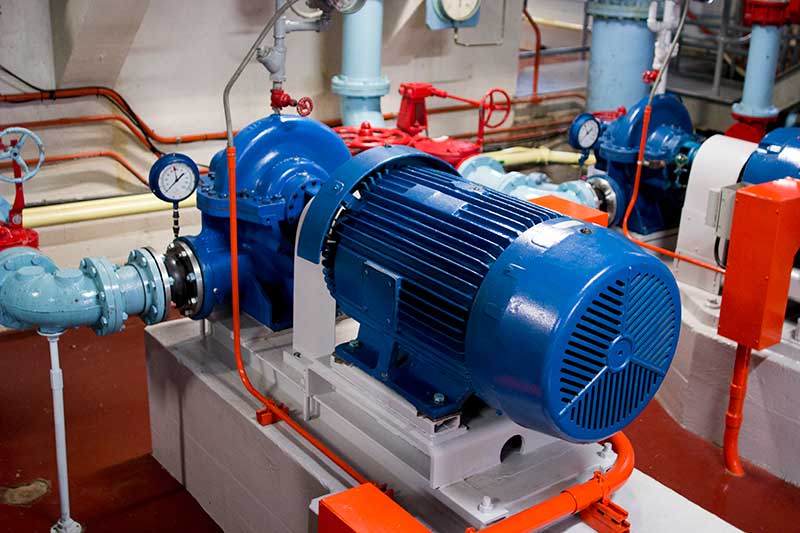
Pump operation is fundamental to numerous industrial, civil, and commercial applications. Its core function is to convert the mechanical energy of a prime mover into kinetic energy of a fluid, manifested as flow and pressure. Pump performance and functionality are significantly influenced by several key components and design principles.
Centrifugal pumps are one of the most common types of pumps. Their operating principle is to accelerate a fluid outward from its center of rotation through a rotating impeller, thereby converting rotational mechanical energy into kinetic energy. The fluid enters the impeller axially or near-axially, is accelerated by the impeller, and then flows radially outward into the diffuser or volute, ultimately merging into the downstream piping system.
Variable frequency drives, fluid couplings, and gearboxes are common methods for regulating pump speed. By enabling the pump to consistently adjust its operating speed to the desired speed under varying operating conditions, these control methods can not only achieve significant energy savings but also significantly extend the life of the equipment.
-
Factors Affecting Centrifugal Pump Speed
The speed of a centrifugal pump has a significant impact on its performance. The following are several key factors:
1. Pump Efficiency
The efficiency of a centrifugal pump generally increases with increasing speed. This is because at higher speeds, the centrifugal force increases, accelerating the velocity of liquid through the pump. Therefore, under appropriate conditions, a centrifugal pump operating at high speeds can achieve higher efficiency.
2. Flow Rate
The flow rate of a centrifugal pump is relatively unaffected by speed, but under certain conditions, flow rate can increase with increasing speed.
3. Pump Head
Increasing the speed of a centrifugal pump can increase its head, but after reaching a certain speed, the head reaches a peak, at which point further increases in speed will no longer increase the head.
-
The relationship between speed and efficiency
When exploring the relationship between pump speed and efficiency, we found that this relationship is dynamic and varies significantly depending on pump type and operating conditions. In the context of pump speed, "efficiency" essentially measures how effectively the pump converts input power into the required flow and pressure.
Pump efficiency typically reaches its peak at a specific design speed, known as the Best Efficiency Point (BEP). Operating a pump at or near the BEP is crucial-not only does this optimize energy consumption, but it also minimizes component wear, thereby extending the life of the equipment. When operating speed deviates from this range (either higher or lower), efficiency generally decreases, leading to increased energy consumption and potential failure.
Key theories closely related to centrifugal pump speed and efficiency are similarity laws-mathematical relationships that reveal how speed changes affect pump performance parameters:
1) Flow Law: Flow rate varies (inversely) with speed.
2) Pressure Law: Pressure varies (inversely) with speed squared.
3) Power Law: Power varies (inversely) with speed cubed.
These laws indicate that even small adjustments to pump speed can significantly impact system performance and operating costs. For example, while reducing speed reduces flow and pressure, the actual energy savings, according to the power cube law, far outweigh the speed reduction.
To intuitively understand these relationships, we can observe the change trend of pump efficiency with speed through the efficiency changes in the following table:

This chart clearly illustrates how pump efficiency changes with speed: when speed exceeds the optimal range, efficiency reaches its peak and then gradually declines. The fundamental reason for this efficiency loss under high-speed operating conditions is the significant increase in mechanical and fluid losses, including frictional resistance and flow separation within the pump.
It is worth noting that excessively low speeds can also adversely affect pump operation. At low speeds, some pump types may be unable to overcome system resistance, resulting in insufficient flow and the risk of overheating or cavitation-the formation and collapse of vapor bubbles within the pump, causing component damage.
By employing variable frequency drives (VFDs), engineers can dynamically adjust pump speed based on system requirements, ensuring continuous operation near the optimal efficiency point. This technology not only effectively reduces energy consumption but also significantly improves pump system reliability and service life by reducing mechanical load and wear.
In summary, a deep understanding of the inherent relationship between pump speed and efficiency helps operators and engineers make informed decisions, ultimately achieving the triple goals of optimizing equipment performance, improving energy efficiency, and reducing maintenance costs. Through precise monitoring and intelligent control, it is possible to maximize the efficiency of the pump system while minimizing operating costs and potential downtime risks.