

Why do we need to flush mechanical seals and what are the flushing methods?
Jul 15, 2025
Leave a message
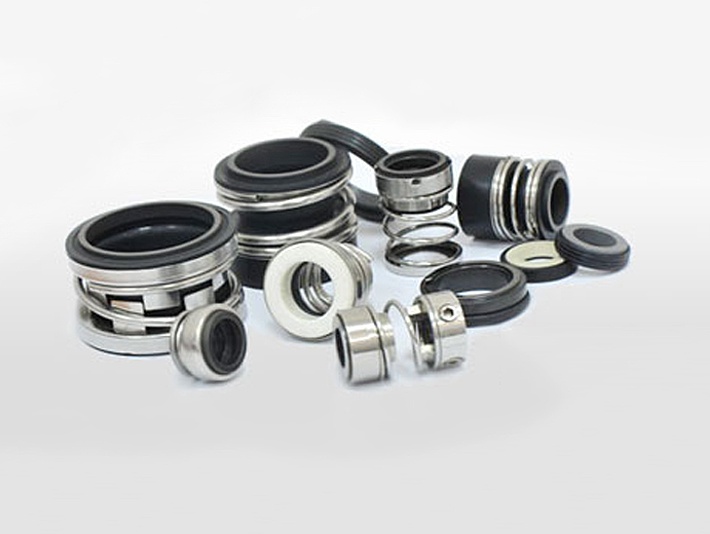
There is another key task to keep the pump running normally - regular maintenance of the pump and its seal support system. The reliability of mechanical seals directly affects the service life and efficiency of the equipment. As a key maintenance method for mechanical seals, the flushing solution needs to comprehensively consider factors such as medium characteristics, operating parameters and working conditions. This article will help you understand the adaptation strategies under different working conditions and provide practical references for optimizing sealing performance and reducing leakage risks.
-
Why do we need to flush mechanical seals?
Mechanical seals are core components of rotating equipment (such as pumps and compressors), and their working environment is often accompanied by high temperature, high pressure and medium contamination. Flushing is to introduce external fluids (such as clean liquids or process media) to force circulation on the sealing surface, mainly based on the following reasons:
1. Heat dissipation demand: The friction of the sealing surface will generate high temperature. For example, in a centrifugal pump with a speed of 3000rpm, the sealing surface temperature can reach more than 150℃ (refer to "API 682 Standard"). Flushing fluid can take away heat and prevent thermal deformation or carbonization of the sealing ring.
2. Impurity control: Particles in the medium (such as solid particles in slurry pumps) will scratch the sealing surface. Flushing can dilute or wash away impurities and reduce wear. For example, in chemical pumps, the flushing fluid flow rate must be ≥1.5m/s to ensure effective cleaning (according to "ISO 21049").
3. Phase stability: Some media are easy to vaporize (such as liquefied petroleum gas). Flushing can maintain the pressure of the sealing chamber and avoid dry friction caused by medium vaporization.
-
Tips for selecting flushing solutions for critical working conditions
High temperature working conditions (>80°C):
Preferred solution: Use self-flushing with a cooler (PLAN21) or internal circulation cooling (PLAN23). PLAN23 circulates coolant through the infusion ring in the seal chamber, and only needs to cool the local liquid, which is more efficient.
Note: When the medium temperature is >300℃ and there is no external flushing condition, high-temperature bellows seal + PLAN21/23 can be used instead of PLAN32 to save costs.
High pressure/high viscosity medium:
Preferred solution: Self-flushing (PLAN11) requires the installation of an orifice plate to control the flow rate to avoid high pressure impact on the sealing end face. When the viscosity is >300cP, PLAN21 is recommended to ensure smooth circulation.
Medium containing solid particles:
Preferred solution: Use a hydrocyclone for external flushing (PLAN32), or use a self-flushing + filtration device. When the particle concentration is >5%, forced external flushing is required.
Extreme conditions: For pulp pumps or slurry pumps, PLAN31 (cyclone + self-flushing) can be used.
Easy to crystallize/polymerize media:
Preferred solution: Double mechanical seals (PLAN53A/B) and an isolation liquid booster system. The isolation liquid pressure must be 0.05~0.1MPa higher than the seal chamber pressure.
Easily vaporized light hydrocarbon media:
Preferred solution: PLAN52 uses a siphon tank to circulate the isolation liquid to avoid vaporization and leakage of the medium. The isolation liquid level needs to be monitored and a low liquid level alarm should be set.
-
Strategy for balancing economy and reliability
Simplified system: When the medium is clean and the temperature is moderate, self-flushing (PLAN11/13) should be given priority to reduce the complexity of the equipment.
Modular design: For high temperature or particle-containing conditions, standardized flushing modules (such as API PLAN21/23) are used to facilitate maintenance and spare parts management.
Redundant design: For key pump groups (such as reactor feed water pumps), double mechanical seals + PLAN53 are used. Although the cost increases, unplanned downtime can be avoided.
The selection of mechanical seal flushing solutions for multi-stage centrifugal pumps needs to comprehensively consider the medium characteristics, operating parameters and industry standards. The core is to extend the seal life through measures such as heat dissipation, cleaning, and pressure control. In practical applications, it is recommended to select mature solutions in combination with the API682 standard, taking into account both reliability and economy.