

How to choose the right boiler feed pump?
Jul 17, 2025
Leave a message
Boiler systems are sophisticated machines that convert water into steam through different stages. The first step in the steam process is to feed water into the machine. To do this, the boiler must be equipped with a boiler feed pump.
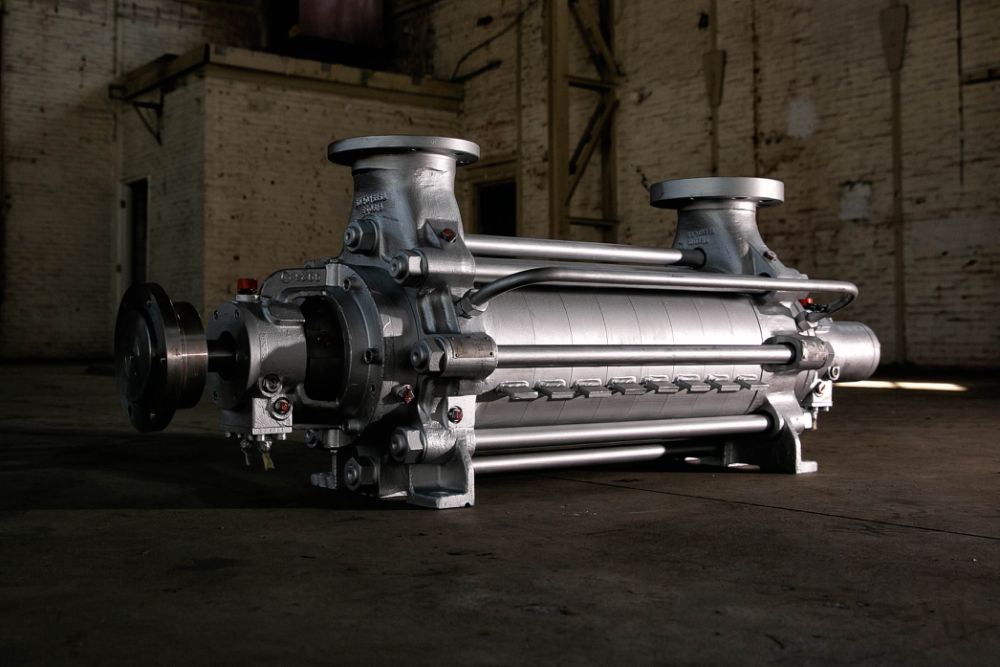
Boiler feed pumps are specialized pumps that deliver water to the steam boiler. These pumps are usually high-pressure devices. Fresh water is delivered to the boiler and turned into steam. Since not all of the steam is used, the condensate is recycled through the condensate return system. The water flows through the boiler feed pump again and the cycle repeats.
Boiler feed pumps are a critical component of any boiler system. All processes begin with the feed water entering the boiler system. Therefore, finding the best pump for your boiler can ensure its safe and long-lasting operation. Following the steps below can help you find the right boiler feed pump for your system.
1. Find out what control method you want to use.
Determining the control method for feedwater delivery will help you choose the type of boiler feed pump you need. There are two common control methods: on-off control and modulating feedwater control. If you use on-off control, you need a very rugged boiler feedwater pump that can withstand the wear and tear of sudden water surges. With modulating feedwater control, you don't have to worry about water surges.
2. Calculate the base flow rate.
Flow rate is the amount of water that flows out of the tap in one minute. In a boiler system, you need a steady feedwater input. Applying pressure helps keep the feedwater flow steady. To do this, you need to first determine the base flow rate.
A good way to determine the base flow rate is to use the following formula: Boiler Maximum Capacity Horsepower x 0.069 x C. The value of C depends on how your pump is cycled: intermittent mode or continuous water supply mode. If your pump is intermittent mode, you can use 1.50. If it is continuous mode, you can use 1.15.
Once you have the base flow rate, you can calculate the total flow rate. However, there are some factors you need to consider.
3. Consider the continuous boiler blowdown flow.
The continuous blowdown flow works to remove total dissolved solids (TDS). This is important to ensure that no impurities can enter the boiler that could add to the wear and tear of the system. Although not a necessary step, it's good to add the continuous boiler blowdown flow to determine what type of boiler feed pump you need. To do this, add 10% of the pump's efficiency flow rate.
4. Check the bypass flow rate.
If your desired control method needs a bypass recirculation line and valve, you need to add the bypass flow rate to get the total flow rate. Some control methods like variable-speed drive (VSD), continuous bypass system, and a controlled bypass system can affect your total flow rate. All these control methods allow maintaining a minimum flow to avoid operating close to the shutoff head. Each bypass flow depends on the minimum flow requirement of the pump. It's usually 10% to 20% of the pump's flow. Just a reminder, always check with the manufacturer or review the pump's tech manual.
5. Compute for the total flow rate.
Now, that you have the base flow rate and other factors like the continuous boiler blowdown flow and bypass flow rate, you can compute for the total flow rate. The total flow rate is the amount of water that passes through the system in a given time.
6. Determine the feed pump's base head.
After getting the total flow rate, you now need to get your pump's total dynamic head (TDH). The TDH is the total amount of pressure when water is flowing in the system. Just like how you computed for the total flow rate, you start with the feed pump's base head. Here are the formulas to get your pump's base head:
At the duty point flow rate (in feet): (boiler operating PSI) X (2.31) X (1.03) / (liquid-specific gravity)
At shutoff head (in feet): (pressure relief valve PSI) X (2.31) X (1.03) / (liquid-specific gravity)
7. Include all suction piping head unit measurements.
Another crucial part of the boiler is the deaerator. It takes oxygen and carbon dioxide from the feedwater so that pure water enters the boiler. Aside from these elements, the deaerator also removes the impurities from the feedwater. Doing so extends the boiler's life.
Calculate the gauge pressure of the deaerator tank, elevation head from the waterline to the centerline of the pump's lowest impeller, and all of the suction line friction losses. In getting the elevation head, make sure you are measuring from the suction side.
8. Include the discharge piping system head components.
Another factor that you need to get your feed pump's TDH, you need to compute for all the friction losses on the pump's discharge side. Include the elevation to the inlet relative to the discharge.
9. Compute for the total dynamic head.
Add all the measurements of the head components: the base head, suction side piping head, and piping system head on the discharge side. Make sure that the base head includes the safety factor.
10. Determine the shutoff head.
Aside from getting the correct head at the required flow rate, you also need to consider the shutoff head. To determine the head at zero flow, the head must be at the safety valve setting and then add three percent.
11. Identify the temperature at the boiler feedwater tank.
Selecting your boiler feed pump also relies on its capacity to withstand different types of temperature. Since the boiler feed pump's task is to carry feedwater from the feedwater tank to the boiler, the pump itself will be exposed to different temperatures.
12. Calculate for the net positive suction head available (NPSHa).
The net positive suction head available (NPSHa) is a way to measure how close the water is to flashing. Usually, the NPSHa can be estimated when the system is being designed and constructed. You can also calculate it using this formula:
NPSHa = (the absolute pressure in the feed water tank) ± (elevation of minimum water level in the tank above feed pump) – (vapor pressure of water in feed tank) – (suction line friction loss)
13. Review available boiler feed pumps that can accommodate your total flow rate, TDH, and NPSHa.
Make sure to consider the curves needed so your pump can meet the calculated conditions. It
is a good idea to choose a pump operating at or to the right of the pump's Best Efficiency Point (BEP) if your maximum flow rate has been used to size the pump. Boilers often operate at a
percentage of their max flow rate, and so having a pump that can operate efficiently at these
reduced flows can ensure longevity of your machines.
14. Check that the shutoff head can also be accommodated.
After selecting the boiler feed pump that meets the desired conditions, make sure to consider the shutoff head as well. The ideal shutoff head must not be less than three percent above the safety valve setting.
15. Check net positive suction head required (NPSHr) versus NPSHa.
When it comes to installing the boiler feed pump, the net positive suction head required or NPSHr should be checked against the NPSHa. Also, make sure there is some margin between the NPSHa and the NPSHr (required). At the pump manufacturer's published NPSHr value, the pump has already experienced a 3% drop in the head, which means the pump is cavitating. This is why providing some margin between the available and required net positive suction head is important. Each NPSHr and NPSHa is unique. Thus, it must be checked (and configured) whenever a boiler feed pump is installed.
16. Double-check material compatibility.
One more factor to consider in choosing your boiler feed pump is its compatibility with the chemicals and the temperature it will handle. The goal is to have a boiler feed pump that can last a long time. Finding the right one that can handle the various chemicals and in different temperatures is the key to longer-lasting equipment.
Last but not least, find a brand you can trust. There are many choices for boiler feed pumps, but only a few brands are trustworthy. HNYB PUMP is a leading global centrifugal pump manufacturer that has earned a good reputation for more than 30 years of manufacturing experience and reliable and stable products. The company is recognized for its pump products designed to meet high global standards and stringent engineering specifications.