

Definition and standards of centrifugal pump energy efficiency, and how to improve the energy efficiency of centrifugal pumps.
Apr 28, 2026
Leave a message
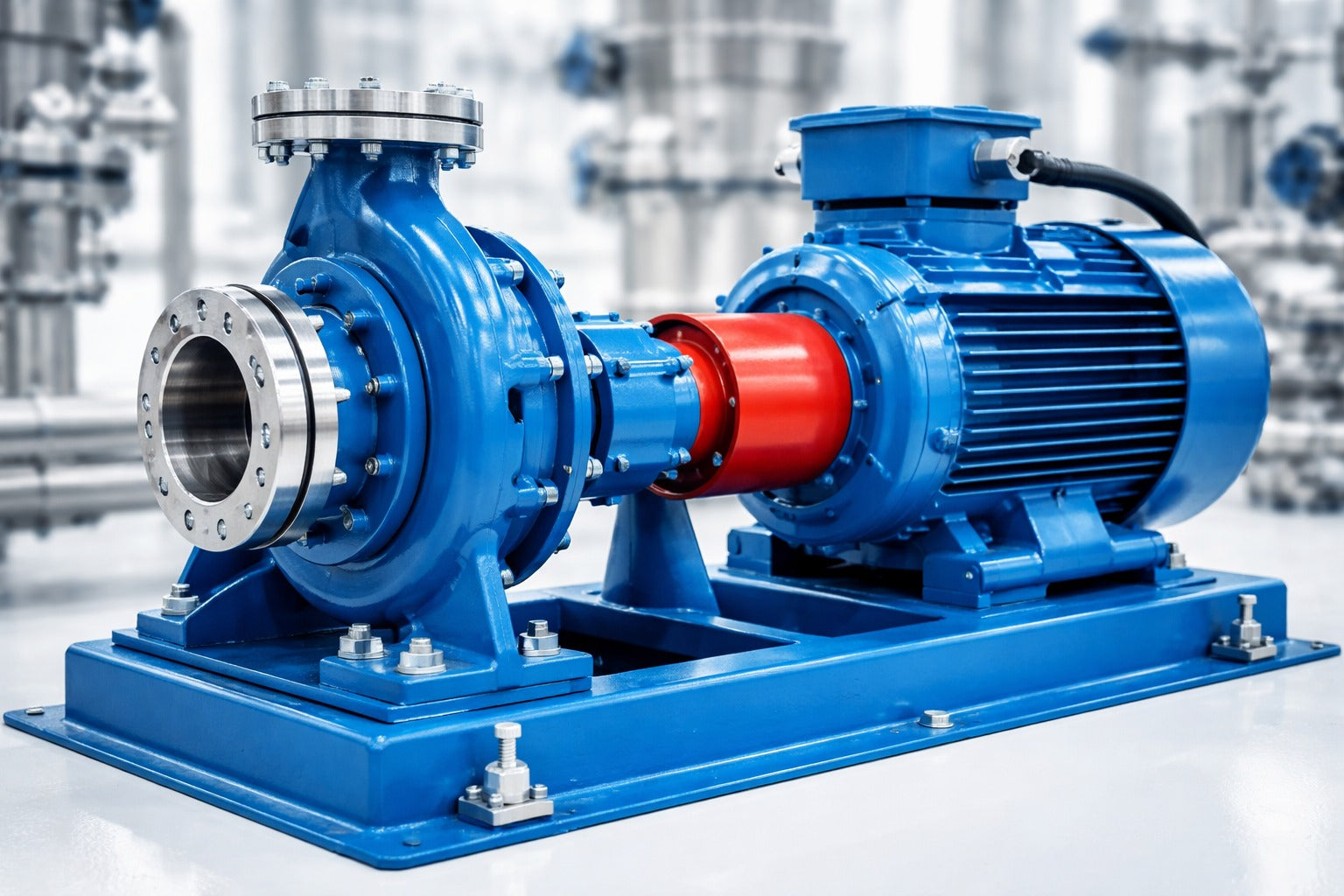
Energy efficiency is one of the most important technical indicators throughout the entire life cycle of centrifugal pumps, directly impacting operating costs, energy consumption, and industry-wide green and low-carbon requirements. Whether in industrial settings such as thermal power, petrochemical, and nuclear power plant conventional islands, or in public sectors like municipal water supply and drainage and water treatment, centrifugal pumps, as core equipment for fluid transport, determine not only energy utilization efficiency but also the long-term economic viability and reliability of their operation. This lecture, as the concluding core content of the centrifugal pump basics series, will systematically analyze the core knowledge points of centrifugal pump energy efficiency from four dimensions: energy efficiency definition, influencing factors, standard requirements, and practical methods for improving energy efficiency. It will combine engineering experience to help engineering technicians accurately grasp the key points of energy efficiency management.
-
Definition of centrifugal pump energy efficiency
Centrifugal pump energy efficiency essentially refers to the ratio of the pump's effective power to its input power, reflecting the pump's ability to convert electrical energy (or mechanical energy) into fluid mechanical energy. Higher efficiency means lower energy loss and lower energy consumption per unit flow rate and unit head. Two core power concepts need to be clarified to avoid confusion:
- Effective Power (Pu): Also known as output power, this is the power actually transferred by the pump to the fluid, i.e., the mechanical energy the fluid gains through the pump, used to overcome pipeline resistance and increase fluid height or pressure. Its calculation follows the basic principles of fluid mechanics, and the formula is: Pu = ρgQH/1,000 (unit: kW).Where ρ is the density of the pumped medium (kg/m³), g is the acceleration due to gravity (m/s²), Q is the actual flow rate (m³/h), and H is the actual head (m). Note: If the flow rate is commonly expressed in m³/h, it needs to be divided by 3,600 to convert it to m³/s before substituting it into the formula.
- Input Power (Pa): Also known as shaft power, this is the power transmitted from the motor to the pump shaft. It is the source of the pump's total energy consumption and must consider motor efficiency, transmission losses (such as coupling transmission), and additional mechanical losses. In practical engineering, it can be indirectly calculated through motor current, voltage, and power factor.
The total efficiency (η) of a centrifugal pump is the ratio of effective power to input power, calculated as: η = (Pu / Pa) × 100%. This is the core indicator for measuring the energy efficiency of a centrifugal pump and the basis for subsequent energy efficiency rating and energy-saving optimization. It is important to note that the energy efficiency of a centrifugal pump is not a fixed value but changes dynamically with operating conditions, media characteristics, and equipment status. Its highest efficiency point (high-efficiency zone) corresponds to the pump's optimal operating point (design operating point), which typically covers an operating range of ±10% of the design operating point.
-
Centrifugal pump energy efficiency rating and standard requirements
To standardize the energy efficiency management of centrifugal pumps, the state has issued GB 19762-2025, "Minimum Allowable Values of Energy Efficiency and Energy Efficiency Grades for Centrifugal Pumps," which will officially come into effect on March 1, 2026. The most significant change in the 2025 version is the consolidation of two standards: GB 19762-2007 (clean water pumps) and GB 32284-2015 (petrochemical pumps). This marks a new stage in my country's centrifugal pump energy efficiency management system, moving from a fragmented approach based on application areas to a unified technical system. This facilitates the standardization of technical language, testing methods, and energy efficiency evaluation frameworks, significantly reducing cognitive biases and operational confusion among manufacturers, testing institutions, and users when implementing the standard. The standard also simultaneously improves the energy efficiency grade calculation method, adding a high-order polynomial mathematical model to enhance the accuracy of energy efficiency evaluation.
- Scope of Application: This standard applies to centrifugal pumps with a specific speed (ns) of 20~300, including single-stage single-suction clean water pumps, single-stage double-suction clean water pumps, multi-stage clean water pumps, pipeline pumps, and petrochemical pumps (for conveying clean liquids). The flow rate range covers 5~20,000 m³/h (varies depending on the pump type). It does not apply to non-metallic pumps or shaftless rotary pumps.
- Energy Efficiency Classification: Centrifugal pumps are classified into three energy efficiency levels, with level 1 being the highest and level 3 being the minimum allowable efficiency. For different types and flow rates, the efficiency values for each energy efficiency level are calculated using a high-order polynomial mathematical model (formula) (including the energy efficiency level coefficient) or determined by referring to an energy efficiency level curve. For example, for a single-stage single-suction clean water pump with a flow rate of 100 m³/h, the efficiency is ≥78.4% for level 1, ≥73.7% for level 2, and ≥56.4% for level 3. Pumps below level 3 are strictly prohibited from production, sale, and use, and those already in use must be phased out.
- Key Changes: The new standard removes the "energy-saving evaluation value" and "basic requirements" from the original standard, adds an energy efficiency grade calculation formula and an energy efficiency grade coefficient calculation method, replaces the baseline efficiency chart with an energy efficiency grade curve, separates pipeline pumps from single-stage single-suction clean water pumps, sets separate energy efficiency limits and energy efficiency grades, and appropriately expands the pump flow range to better meet the current application needs of industrial pumps.
Furthermore, while relevant international standards (such as API 610 and ISO 13709) do not directly specify energy efficiency grades, they do provide clear requirements for pump efficiency testing methods and performance assurance, complementing domestic standards and jointly regulating the energy efficiency management of centrifugal pumps.
-
Practical methods for improving the energy efficiency of centrifugal pumps
To truly implement energy efficiency improvements, the core approach can be summarized as "doing every step right, from initial design to daily operation and maintenance." This typically requires addressing four main areas: design selection, operational adjustment, technological upgrades, and maintenance management. It necessitates choosing an appropriate solution based on the specific engineering requirements, balancing energy-saving effects with economic efficiency.
Precise Design and Scientific Selection
This is the first and most crucial step in energy conservation, fundamentally avoiding inherent energy waste.
- Adhering to the new national standard and prioritizing high efficiency: Since March 1, 2026, the latest national standard GB 19762-2025, "Minimum Allowable Values of Energy Efficiency and Energy Efficiency Grades for Centrifugal Pumps," has been officially implemented. This standard integrates the requirements for clean water pumps and petrochemical pumps, providing an authoritative basis for evaluating product energy efficiency. When purchasing or designing new systems, products meeting Level 1 or Level 2 energy efficiency standards should be prioritized.
- Avoiding the pitfall of "overkill": This is the most common energy consumption trap. Many people choose high-power pumps for insurance purposes, leading to prolonged operation in inefficient zones. The scientific approach is based on precise operating condition calculations, matching the pump's rated operating conditions (i.e., optimal efficiency point) with actual operational needs, ensuring the pump unit operates within its high-efficiency range for extended periods.
- Improve hydraulic efficiency through advanced design: During the design and selection phases, cutting-edge technologies can be used to further optimize the pump's hydraulic model. Tools such as CFD simulation and 3D printing can be used to manufacture impellers with superior flow channels, achieving hydraulic efficiency of over 91% for some centrifugal pumps.
- Introduce intelligent design and systems thinking: If funding and technical conditions permit, consider using an optimization design platform integrating artificial intelligence (AI), or introducing "full lifecycle" services during the design phase. This allows for system-level coordination of pump, pipeline, and drive equipment matching, achieving overall energy savings.
Refined Operation and Intelligent Adjustment
Choosing the right equipment is important, but how it's used daily is equally crucial. Scientific operation can achieve immediate energy savings without requiring significant additional investment.
- Variable Frequency Drive (VFD): When the load changes, VFD is the most efficient adjustment method. By adjusting the motor speed to match the actual operating conditions and following the pump similarity law, a 10% reduction in speed can reduce shaft power by 27.1%, resulting in a comprehensive energy saving rate of 20%-35%.
- Practical Benefits of VFD: In the Yongping oil terminal application case, after stabilizing the operating frequency at 40 Hz through VFD, a single pump can save up to 21.96 kWh per hour, resulting in annual energy savings of 192,000 kWh. Simultaneously, equipment vibration and noise are significantly reduced, effectively extending the unit's service life.
- "Multi-Pump Collaboration" and "Single-Pump Replacement": In multi-pump systems, the number of pumps can be dynamically started and stopped according to the load. Replacing two older pumps with a single high-flow, high-efficiency pump is also an effective operational optimization. For example, one project achieved a reduction in unit energy consumption cost of over 18% by replacing two pumps with a single pump, while simultaneously improving efficiency.
- Avoid Incorrect Operation: Avoid excessive adjustment of the outlet valve and failure to purge air before startup. These improper practices can increase energy consumption by 8%-12% and accelerate pump wear, shortening equipment lifespan.
Targeted Equipment Retrofitting
For existing, older equipment, targeted retrofitting is a cost-effective solution, achieving energy efficiency improvements without requiring complete equipment replacement.
Impeller Cutting: For pumps with a fixed speed, if the head is too high, a small amount of machining on the impeller's outer diameter can lower its performance curve, returning it to the high-efficiency range.
Surface Coating Technology: Spraying special materials onto the impeller or pump chamber inner wall is an effective method for repairing wear and restoring efficiency. Different coatings are suitable for different operating conditions:
- Polyurethane Coating: Used in hydraulic pumping projects, it effectively resists silt abrasion and cavitation, maintaining a smooth flow path.
- Ceramic/Alloy Coating: Spraying wear-resistant materials such as silicon carbide or high-chromium alloys onto mining pumps effectively addresses high-wear conditions.
- Nanocoating: Cutting-edge technologies such as graphene nanocoatings possess a certain self-healing potential.
Complete Pump Replacement: If the old pump's efficiency has significantly decreased due to age and severe wear, replacing it with a brand-new, high-efficiency, energy-saving pump is usually a more economical choice.
Systematic Maintenance and Monitoring
Meticulous maintenance can prevent hidden efficiency losses, and long-term adherence can maintain the pump's high-efficiency operation and reduce energy consumption.
- Conduct Professional Energy Efficiency Audits: Before retrofitting, it is recommended to commission a professional organization to conduct a comprehensive assessment. An international service case shows that through professional audits and optimization, the customer increased the pump set's energy efficiency from 72% to 83%, achieving millions in energy cost savings annually.
- Establish Full Lifecycle Maintenance: Equipment efficiency decreases due to wear, potentially by 2%-5% annually. Therefore, a standardized maintenance plan needs to be established, such as regularly cleaning the impeller, replacing seals, and adjusting wear ring clearances, which can restore pump efficiency by 5%-8%.
- Apply intelligent monitoring technology: Utilizing sensors and IoT technology, combined with AI predictive analysis, pump operating parameters (flow rate, head, vibration, temperature, etc.) can be monitored in real time, providing early warnings of faults and preventing energy consumption surges due to equipment malfunctions, while also reducing unplanned downtime.
Optimization from the "Pump System"
Sometimes, energy consumption problems lie not in the pump itself, but in the piping system. Optimizing the piping can achieve significant energy savings, and the modification is relatively easy.
- Optimize piping design: Reducing unnecessary bends and valves, or appropriately increasing pipe diameter, can significantly reduce system resistance and energy consumption.
- Pay attention to cavitation: Cavitation not only damages equipment but also severely reduces pump efficiency. The key to preventing cavitation is ensuring that the effective net positive suction head (NPSH) of the system is greater than the required NPSH of the pump. Currently, new technologies can reduce the critical value for pump cavitation by more than 20%, significantly reducing the damage caused by cavitation.
Centrifugal pump energy efficiency is the result of the coordinated efforts of multiple stages, including design, manufacturing, operation, and maintenance. The core is controlling the three major losses: hydraulic, volumetric, and mechanical, ensuring the pump operates in its high-efficiency range for extended periods. In accordance with the new national standards, engineering technicians need to focus on three key points: first, clearly understanding energy efficiency calculation specifications and grade requirements to ensure equipment compliance; second, identifying key factors leading to energy efficiency decline, such as deviations in operating conditions and component wear, and intervening promptly; and third, selecting appropriate energy efficiency improvement schemes based on the specific project requirements, balancing energy saving effects with economic efficiency.
From a practical engineering perspective, the root cause of energy efficiency decline in most centrifugal pumps is "deviation in operating conditions" and "inadequate maintenance." By scientifically adjusting operating conditions and strengthening daily maintenance, an energy efficiency improvement of 5% to 15% can be achieved, yielding significant energy savings without substantial investment. For older pumps, energy efficiency can be further improved through hydraulic component modification and frequency conversion upgrades, aligning with the current demands for green and low-carbon industrial development.