

How to Select the Right Centrifugal Pump for Petrochemical Applications
Nov 17, 2026
Leave a message
Centrifugal pumps are essential equipment in petroleum refining, petrochemical processing, chemical transfer, cooling water circulation, and other industrial operations. They transport a wide range of liquids under demanding conditions, including high pressure, elevated temperatures, corrosive environments, and continuous operation.
Selecting the right centrifugal pump for a petrochemical application requires more than matching flow rate and discharge pressure. Different process liquids have different physical and chemical properties, and each application may have specific requirements for pump construction, materials, shaft sealing, hydraulic performance, and operational safety.
An unsuitable pump can result in excessive wear, leakage, cavitation, reduced efficiency, and unexpected production interruptions.
This guide explains the key factors engineers and purchasing teams should consider when selecting centrifugal pumps for petrochemical applications.
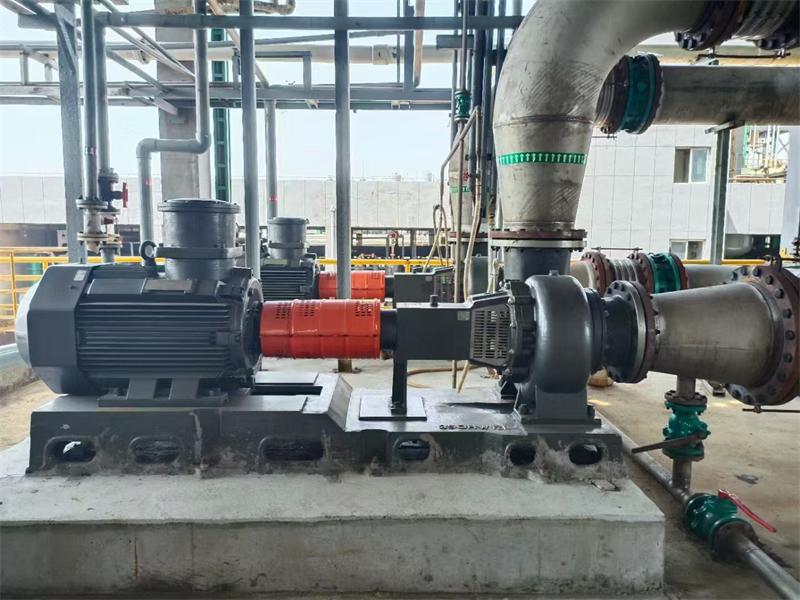
1. Understand the Properties of the Pumped Liquid
The first step in pump selection is understanding exactly what the pump will handle. Fluid properties directly influence pump performance, material selection, and sealing requirements.
Important parameters include:
Chemical composition: Identify the main chemical components, possible contaminants, pH value, and corrosive characteristics. Even small amounts of impurities can affect material compatibility.
Density and viscosity: Liquid density influences the required pump power, while viscosity can affect flow resistance, efficiency, and hydraulic performance.
Operating temperature: High temperatures can change fluid properties, increase vapor pressure, and affect the mechanical strength of pump components and sealing materials.
Vapor pressure: This is particularly important when transferring volatile hydrocarbons or hot process liquids because it influences the available NPSH and cavitation risk.
Solids and gas content: Suspended particles may cause abrasion or blockage, while entrained gas can reduce hydraulic performance and interfere with stable pump operation.
Hazardous characteristics: Flammable, toxic, volatile, or environmentally sensitive liquids require particular attention to leakage prevention, sealing arrangements, and site safety requirements.
A complete understanding of the liquid composition and operating environment is essential before selecting the pump model and material configuration.
2. Determine the Required Flow Rate and Total Head
After confirming the fluid properties, the next step is to establish the hydraulic requirements of the pumping system.
Two primary parameters are required: flow rate and total dynamic head.
Required Flow Rate
Flow rate represents the volume of liquid that the pump must deliver over a specified period, commonly expressed in m³/h.
Engineers should identify:
Normal operating flow rate.
Rated or design flow rate.
Minimum and maximum expected flow.
Possible changes in production demand.
Whether continuous or intermittent operation is required.
Selecting a pump based only on maximum flow may result in inefficient operation during normal production. The actual operating range should be considered when evaluating the pump performance curve.
Total Dynamic Head (TDH)
Total dynamic head represents the total energy per unit weight that the pump must supply to move liquid through the system.
It includes static elevation differences, pressure differences, velocity changes, and pipeline friction losses.
A simplified engineering relationship is:
TDH = Static head + Pressure head difference + Velocity head difference + Pipeline losses
The calculation should consider the actual suction and discharge conditions rather than relying only on the required discharge pressure.
For systems with long pipelines, numerous fittings, control valves, or significant elevation changes, friction losses can represent an important part of the total head requirement.
Once the flow rate and TDH are determined, the pump manufacturer can evaluate the appropriate pump model, impeller size, rotational speed, and motor power.
3. Select the Appropriate Centrifugal Pump Type
Different petrochemical processes require different pump configurations. The appropriate structure depends on the required flow, head, liquid characteristics, installation conditions, and project specifications.
| Pump type | Main characteristics | Typical applications |
|---|---|---|
| End suction centrifugal pump | Compact structure and relatively straightforward installation | General liquid transfer, utility services, and circulation |
| Horizontal multistage pump | Multiple impellers generate high pressure and head | High-pressure process water, boiler feed, and industrial water supply |
| Double suction split case pump | Liquid enters the impeller from both sides, supporting large flow rates | Cooling water circulation and large-volume water transfer |
| Chemical centrifugal pump | Designed with suitable materials and sealing arrangements for process liquids | Chemical transfer and corrosive liquid handling |
| Vertical sump or submerged pump | Hydraulic assembly operates vertically in a tank or sump | Tank drainage, collection pits, and process liquid transfer |
| Magnetic drive or other sealless pump | Eliminates the conventional dynamic shaft-seal leakage path | Selected hazardous, toxic, or valuable liquid services |
For example, a double suction split case pump may be suitable for a high-flow cooling water system, while a horizontal multistage centrifugal pump may be more appropriate for high-head water supply.
For corrosive or hazardous process liquids, chemical pumps with suitable wetted materials and sealing configurations should be considered.
A sealless design may also be evaluated when leakage containment is a particularly important requirement. However, it must be checked for operating limits, cooling requirements, solids compatibility, and maintenance considerations.
The pump type should always be selected according to the actual process duty, not simply based on nominal capacity.
4. Select Materials According to Corrosion and Operating Conditions
Material selection is one of the most important considerations in petrochemical pump applications.
Different process liquids may cause corrosion, erosion, chemical attack, or deterioration at elevated temperatures. Selecting an unsuitable material can significantly shorten pump service life.
Common material options include:
| Material | General characteristics | Selection considerations |
|---|---|---|
| Cast iron | Economical for selected industrial water services | Confirm compatibility with pressure, temperature, and liquid chemistry |
| Carbon steel | Commonly used for industrial process applications | Evaluate corrosion conditions and mechanical design requirements |
| Stainless steel 304 / 316 | Provides corrosion resistance in many environments | Actual chemical concentration and temperature must be checked |
| Duplex stainless steel | Offers a combination of strength and corrosion resistance | Evaluate chloride concentration, temperature, and applicable material limits |
| Specialized alloys | Designed for demanding chemical and corrosive environments | Select according to process-fluid compatibility and project requirements |
Material selection should cover more than the casing and impeller. Shafts, sleeves, wear rings, fasteners, gaskets, and seal components must also be considered.
For example, a pump handling acidic liquid may require corrosion-resistant wetted components, while a pump handling abrasive process liquid may need improved wear resistance.
Chemical resistance tables can provide preliminary guidance, but final material selection should be based on the complete fluid composition, temperature, concentration, operating pressure, and expected service life.
5. Choose a Suitable Shaft Sealing Arrangement
Sealing performance is particularly important when pumping volatile, flammable, toxic, or environmentally sensitive liquids.
The shaft seal must prevent uncontrolled leakage while operating under the specified pressure, temperature, and rotational speed.
Single Mechanical Seal
A single mechanical seal may be suitable for many general process applications where the fluid characteristics and leakage requirements allow it.
Its advantages include a relatively straightforward configuration and manageable maintenance requirements.
Double Mechanical Seal
For certain hazardous or volatile fluids, a double mechanical seal may provide additional containment and operational protection.
Depending on the selected arrangement, a pressurized barrier-fluid or unpressurized buffer-fluid system may be required.
The fluid supply and auxiliary equipment must be compatible with the pumped liquid and actual operating conditions.
Magnetic Drive and Canned Motor Pumps
When conventional shaft-seal leakage presents an unacceptable risk, sealless pump designs may be considered.
Magnetic drive pumps transmit power through a magnetic coupling without a conventional dynamic shaft seal. Canned motor pumps integrate the motor and hydraulic assembly within a sealed arrangement.
These designs can reduce the risk of process-liquid leakage, but they are not suitable for every application. Temperature, viscosity, solids content, cooling requirements, and operating pressure must be carefully evaluated.
For projects specifying API 682, the mechanical seal and associated auxiliary system should be reviewed against the applicable project requirements.
6. Evaluate NPSH and Prevent Cavitation
Cavitation is a common cause of reduced performance and premature damage in centrifugal pumps.
It occurs when the local liquid pressure falls below the vapor pressure, causing vapor bubbles to form and subsequently collapse in higher-pressure regions.
In petrochemical systems, cavitation risk may increase when handling hot or volatile liquids, particularly where suction pressure is limited.
Two parameters are important:
NPSHa (Net Positive Suction Head Available): The suction head provided by the system under actual operating conditions.
NPSHr (Net Positive Suction Head Required): The NPSH requirement specified by the pump manufacturer at a particular operating flow and speed.
The available NPSH must exceed the pump's required NPSH by an appropriate margin.
When evaluating NPSH, engineers should consider:
Liquid temperature and vapor pressure.
Suction tank pressure and liquid level.
Suction pipeline diameter and friction losses.
Pump installation elevation.
Required operating flow rate.
Changes in process pressure and operating conditions.
The pump should also be evaluated across its expected operating range rather than only at one rated point.
7. Consider Operating Reliability and Maintenance Requirements
Petrochemical facilities often operate continuously, so pump reliability has a direct influence on production efficiency and maintenance costs.
A suitable pump should maintain stable performance throughout its intended operating range.
Important considerations include:
Best Efficiency Point (BEP): Select a pump whose normal operating point is appropriately positioned relative to its BEP and recommended operating region.
Bearing design and lubrication: Bearings must be suitable for the pump's speed, mechanical loading, and temperature conditions.
Rotor balance and alignment: Accurate manufacturing, correct assembly, and suitable balancing help reduce excessive vibration and mechanical wear.
Thermal expansion: High-temperature services require consideration of casing movement, shaft expansion, coupling alignment, and piping loads.
Spare parts and maintenance: Evaluate the availability of seals, bearings, wear rings, sleeves, and other replaceable components.
Operating redundancy: For critical continuous-duty processes, the project may require installed standby pumps or another arrangement to maintain operation during maintenance.
A pump should be evaluated according to its total service requirements, not only its initial purchase price.
8. Understand Applicable Industry Standards and Testing Requirements
Petrochemical pump projects may specify standards according to the process criticality, operating conditions, and purchaser requirements.
API 610 is widely referenced for centrifugal pumps used in petroleum, petrochemical, and natural gas industry services. It covers important aspects of pump design, construction, materials, inspection, and testing.
API 682 addresses shaft sealing systems for centrifugal and rotary pumps used in petroleum, natural gas, and chemical industries.
Not every petrochemical pump automatically requires API 610 or API 682. The applicable standards, editions, and supplementary technical requirements should be identified in the project specification.
As of November 2026, the latest published edition of API 610 is the 13th Edition, released in June 2026. Projects may still specify an earlier edition, so buyers and manufacturers should confirm the contractual requirements before production.
For pumps manufactured according to specified technical requirements, the quality control process may include:
Raw material inspection and identification.
Material certificates and traceability.
Casting and heat-treatment inspection.
Machining and dimensional inspection.
Rotor balancing and assembly checks.
Hydrostatic pressure testing.
Hydraulic performance testing.
Final inspection and documentation.
The exact inspection scope and acceptance criteria should be agreed upon between the purchaser and manufacturer.
9. Information Required Before Requesting a Pump Quotation
Providing complete technical information helps the manufacturer recommend a suitable pump more accurately.
Before requesting a quotation, prepare the following information:
| Parameter | Required information |
|---|---|
| Pumped liquid | Liquid name, chemical composition, and contaminants |
| Flow rate | Normal, minimum, and maximum flow |
| Total head | Required pump head and system pressure |
| Temperature | Normal and maximum operating temperature |
| Density and viscosity | Values at the actual operating temperature |
| Suction conditions | Pressure, liquid level, pipeline arrangement, and NPSHa |
| Discharge conditions | Required pressure and pipeline resistance |
| Corrosion and solids | Corrosive properties, particle size, and concentration |
| Sealing requirements | Single seal, double seal, or sealless arrangement |
| Standards | Applicable project standards and editions |
| Installation | Horizontal, vertical, or submerged arrangement |
The more complete the technical information, the easier it is to determine whether a standard pump configuration is suitable or whether a customized solution is required.
Conclusion
Selecting the right centrifugal pump for petrochemical applications requires a comprehensive understanding of the process liquid, hydraulic conditions, material compatibility, shaft sealing, and operating requirements.
The most suitable pump is not necessarily the one with the highest pressure rating or the most advanced construction. It is the pump that meets the actual process requirements while maintaining reliable performance, safe operation, and manageable maintenance costs.
By evaluating flow rate, total head, NPSH, materials, sealing arrangements, and applicable industry standards together, engineers can reduce selection errors and improve long-term equipment reliability.
HNYB PUMPS manufactures industrial centrifugal pumps for a range of industrial water supply, process circulation, chemical transfer, and high-pressure applications. With in-house casting, heat treatment, machining, assembly, coating, and testing capabilities, HNYB can evaluate customized pump manufacturing according to customer-specified technical requirements, including applicable API-related project requirements subject to engineering review and agreement.