

How to efficiently and stably achieve parallel or series operation of multiple water pumps in a system
Nov 21, 2025
Leave a message
In complex systems, achieving balanced operation of multiple pumps requires a solid understanding of pump fluid mechanics and the ability to accurately interpret performance curves. Each pump in the system possesses a unique performance curve, which graphically illustrates its operating characteristics under different conditions. This curve is crucial for predicting the pump's performance in terms of flow rate, head, and efficiency-parameters that change with variations in pump speed, impeller diameter, and the characteristics of the pumped medium.
Typical pump performance curves reveal the relationship between flow rate (usually in gpm or m³/h) and head (in ft or m). In addition, the curves typically include auxiliary curves representing pump efficiency and power consumption, providing crucial information for understanding operating costs and energy efficiency levels at different operating points.
Key points for interpreting performance curves
- Flow Rate vs. Head Relationship: This core curve shows the characteristic that pump flow rate gradually decreases as system resistance (head) increases. The pump's optimal operating range is located near the Best Efficiency Point (BEP) on the curve.
- Efficiency Curve Characteristics: This type of curve clearly shows the pump's operating efficiency at different flow rates. Operating the pump near its optimal efficiency point is crucial for reducing energy consumption and equipment wear.
- Power Consumption Patterns: Understanding the characteristics of power demand variation with flow rate helps in rationally planning system load and ensuring that power allocation remains within safe thresholds.
Net Positive Intake Head (NPSH) and Cavitation
Required Net Positive Suction Head (NPSHR): This value represents the minimum suction head required at the pump inlet to prevent cavitation. Cavitation damages the pump impeller and shortens its lifespan.
Understanding NPSH (Net Positive Suction Head) is crucial for system design, ensuring that suction conditions do not trigger cavitation problems. The system's NPSHA must always be higher than the required NPSHR, maintaining an appropriate safety margin.
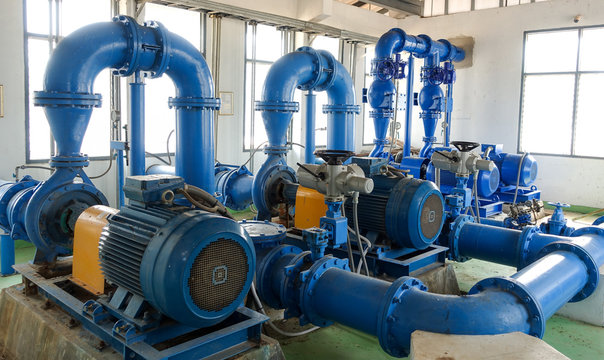
When dealing with multi-pump systems, the interaction between pump performance curves is particularly critical. When pumps operate in parallel, their performance curves superimpose to form a new system curve – at the same head, the total flow rate will be higher than the flow rate of a single pump. Conversely, when pumps operate in series, the total head at a given flow rate is the sum of the heads of each pump.
Pump Parallel and Series Configurations:
1. Parallel Operation: The flow rates of each pump are superimposed, providing a higher total flow rate for the system.
2. Series Operation: The heads produced by each pump are superimposed, suitable for applications requiring high heads at medium flow rates.
To achieve optimal balance and performance in multi-pump systems, it is crucial to understand these fundamental principles and carefully analyze performance curves. Analysis ensures that pumps operate at (or near) their peak efficiency, resulting in energy savings and extended equipment lifespan.
Flow and pressure balancing technology
Achieving flow and pressure balance among multiple pumps in a system is crucial for maintaining equipment efficiency and extending service life. Depending on specific needs and system configuration, several techniques can be employed to ensure this balance.
- Using Balancing Valves: Installing balancing valves is an effective way to manually control the flow rate of each pump. The principle is to adjust the valve to change the system resistance, thereby altering the flow rate to achieve the desired system performance. Balancing valves are particularly important in systems with significant load variations.
- Pump Impeller Cutting: Cutting the pump impeller (i.e., adjusting its diameter) is another method to balance flow and pressure in a multi-pump system. Physically changing the impeller size shifts the pump's performance curve, making it more effectively match the required system curve. The advantage of this method is that it permanently adjusts the pump's characteristics to suit specific system requirements.
- Speed Control: Variable frequency drives (VFDs) are increasingly used in modern pumping systems to achieve real-time pump speed control. Adjusting the motor speed changes the pump's output, directly affecting the flow and pressure in the system. This dynamic adjustment is crucial for systems with changing demands, and it helps the pump operate closer to its optimal efficiency point, thereby reducing energy consumption.
- Sequential Pump Operation: In systems with frequent load fluctuations, a sequential start-stop strategy is an effective way to optimize pump operation. This technology starts and stops each pump in turn, matching the required flow and pressure to the system's needs. This avoids the inefficiency caused by multiple pumps operating at low loads simultaneously and significantly reduces energy consumption and equipment wear.
- Pump Control Synchronization: For complex systems, advanced automated control systems can be used to achieve synchronized and coordinated operation of multiple pumps. These systems utilize sensors and control software to monitor key parameters such as flow and pressure in real time and dynamically adjust the status of each pump, thereby maintaining a highly efficient and stable hydraulic balance throughout the system.
- System Monitoring and Feedback Control: By deploying sensors and a closed-loop feedback system, the pump system can be continuously monitored and automatically adjusted. This system can autonomously adjust equipment output based on real-time operating data, continuously maintaining the system under optimal operating conditions without frequent manual intervention.
Maintenance and monitoring - the key to ensuring optimal operation
1. Maintenance Plan
Maintenance is a critical element in ensuring the stable operation of multi-pump systems. Implementing a comprehensive maintenance plan is essential for guaranteeing the efficient and reliable operation of all components. This plan should include core elements such as regular inspections and performance testing, lubrication management, and replacement of wear parts.
Regular Inspections and Performance Testing: Regular inspections help detect equipment anomalies early, prevent potential damage, and avoid high repair costs. Performance testing should be conducted systematically to verify that the pump set consistently meets design performance requirements. Any deviation from standard parameters may indicate potential problems such as impeller wear or seal failure.
Lubrication Management: Implementing standardized lubrication management for pump bearings and seals is a key measure to reduce frictional losses and extend equipment life. The selection of lubricant and the filling cycle should strictly follow the manufacturer's guidelines and can be appropriately optimized according to the actual operating conditions of the equipment.
Parts Replacement: Worn parts not only reduce pump operating efficiency but may also cause systemic failures. A planned replacement mechanism should be established for wear parts such as seals, bearings, and O-rings. Selecting high-quality replacement parts is crucial for maintaining long-term stable operation and ensuring the safety of the system.
2. Monitoring Tools and Technologies
Continuous monitoring tools play a central role in modern pump system maintenance by providing real-time operational data. This data helps operators issue early warnings before problems escalate, providing decision support for proactive maintenance. The following are key monitoring technologies commonly used in multi-pump systems:
- Vibration Analysis: Abnormal vibration usually reflects mechanical problems such as misalignment and bearing failure. Regular vibration analysis enables early identification and intervention.
- Thermal Imaging Detection: Scanning the pump unit with an infrared thermal imager can accurately identify localized overheating phenomena and promptly detect potential hazards such as abnormal lubrication or bearing overload.
- Pressure and Flow Sensing: Continuous monitoring of system pressure and flow can assess the actual operating efficiency of the pump and provide a basis for dynamic system adjustment.
- Acoustic Monitoring: Abnormal noises during pump operation are important precursors to problems such as cavitation or misalignment. Acoustic sensors can be used to automatically capture and analyze these anomalies.
3. Advanced Predictive Maintenance Technology
The development of predictive maintenance technology is driving the evolution of operation and maintenance models towards a more forward-looking direction. Predictive systems based on machine learning and artificial intelligence can accurately determine the optimal maintenance timing based on real-time sensor data (rather than fixed periods). This method not only improves operational efficiency but also significantly extends equipment lifespan by preventing abnormal wear and tear.
By systematically deploying the above monitoring technologies and strictly implementing maintenance plans, it is ensured that each pump unit operates stably within design specifications, thereby achieving optimal performance, highest reliability, and longest service life. This systematic operation and maintenance strategy will also bring significant energy savings and operational cost optimization throughout the system's entire lifecycle.