

Centrifugal Pump Mechanical Seal Replacement Guide
Jun 23, 2026
Leave a message
Mechanical seals are critical components commonly used in industrial equipment, widely applied in rotating devices such as pumps, compressors, and agitators to prevent media leakage and the intrusion of external impurities. Proper disassembly, installation, selection, and use of mechanical seals are essential for the normal operation of equipment. This article will provide a detailed introduction to mechanical seals and offer operating guidelines.
-
Basic knowledge of mechanical seals
Definition of Mechanical Seals
A mechanical seal is a device that relies on the contact of the end faces of one or more pairs of perpendicular dynamic and static rings to achieve a seal, through auxiliary sealing. It effectively prevents fluid leakage and has a long service life.
Composition of Mechanical Seals
- Mechanical seals typically consist of the following parts:
- Rotating ring: Rotates with the shaft and mates with the stationary ring to form a sealing face.
- Stationary ring: Fixed to the equipment housing and mates with the rotating ring to achieve a seal.
- Spring: Provides initial pressure to ensure a tight fit between the rotating and stationary rings.
- Auxiliary sealing ring: Prevents fluid leakage from the axial or radial direction.
- Transmission mechanism: Transmits the rotation of the shaft to the rotating ring.
Classification of Mechanical Seals
- By Structure: Single-face seal, Double-face seal, Multi-face seal.
- By Medium Pressure: Internal seal, External seal.
- By Sealing Medium: Dry gas seal, Liquid seal, Gas seal.
-
Operating instructions for replacing mechanical seals
Preparation
Turn off the equipment power and drain the medium from the equipment.
Prepare disassembly tools, such as wrenches, screwdrivers, and rubber mallets.
Wear necessary protective equipment, such as gloves and goggles.
Installation Steps
- Isolate and Lock. Complete the lockout tag. Verify that the energy is zero. The pump has been depressurized, emptied, and cooled.
- Remove the Cover and Coupling. Remove the cover, cover plate, and coupling components as designed. Mark the relative positions of the couplings for reference during reassembly.
- Record. Take photos before removing each component. Record the orientation of the gland, old seal, and any parts that may be installed backwards.
- Remove the Old Seal. Remove the gland. Remove the stationary ring and rotating assembly according to the manufacturer's instructions. Leave the end faces for diagnostics – do not clean them yet.
- Clean. Clean the seal cavity, gland mounting surface, and all contact surfaces. Ensure there is no debris, loose rust, or particles.
- Inspect. This step distinguishes between a routine seal replacement and a seal replacement that will not re-leak.
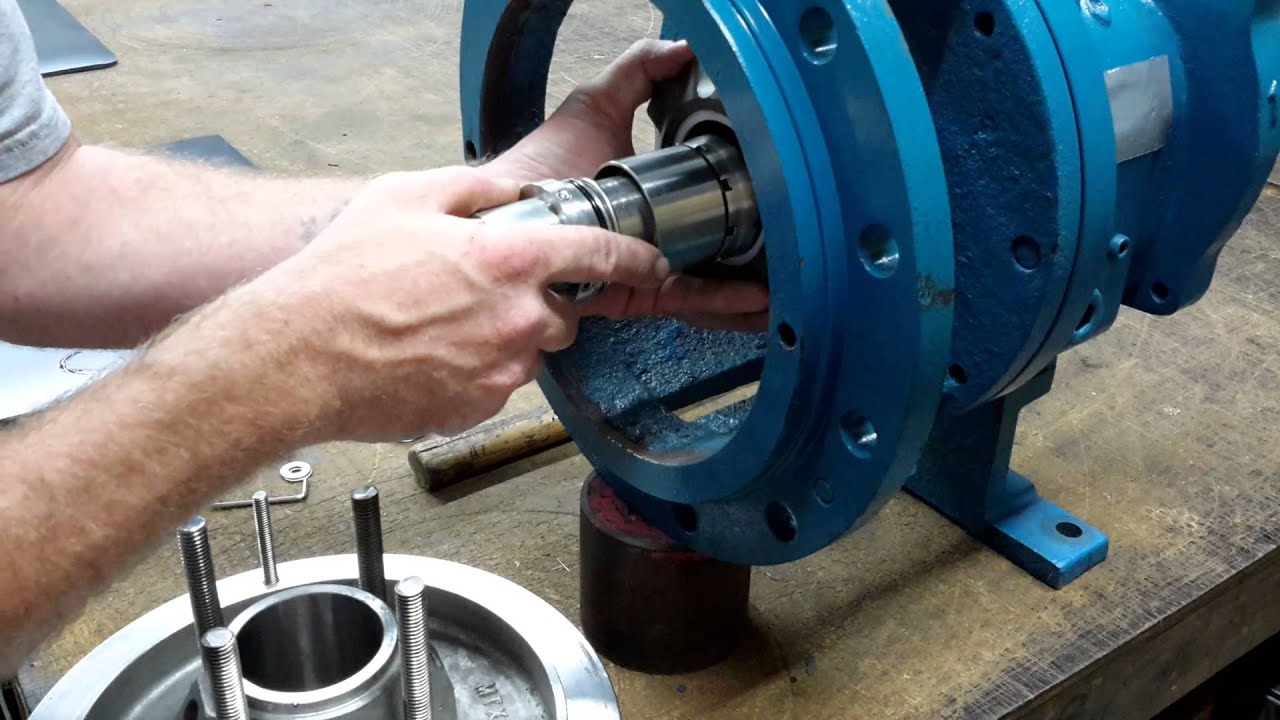
- Install the New Seal. Do not touch the end faces with your fingers – skin grease will contaminate the seal surface. Use only the recommended lubricant for the O-ring and sliding parts. According to the design, install the stationary ring into the gland and mount the rotating assembly onto the shaft or bushing. Do not force it in. If it doesn't fit, something is wrong: check, don't push.
- Reinstall. Tighten the gland as per the manufacturer's instructions. Uneven force on the gland will cause the stationary ring to tilt; a loose gland will prevent the stationary seal from being tightened. Reconnect the flushing lines. Reinstall the coupling, guard, and cover.
Precautions
Avoid striking the seals with hard objects during disassembly to prevent damage to the sealing surface.
Properly store the parts after disassembly to prevent loss or contamination.
-
Post-replacement testing and controlled startup
Before Startup:
- The pump should rotate freely, if design allows. If resistance is felt, stop and check.
- The pump has been fully primed. Open the vent valve. Confirm fluid in the suction line.
- Flush is open. Confirm pressure and flow according to the configured program. If the seal relies on flushing, do not start without flushing.
- Valves are in the correct position: Suction valve open, discharge valve operated according to the startup procedure.
- Shield and cover are reinstalled.
Controlled Startup:
- Short initial start-up. Monitor for leaks, noise, and seal area temperature.
- Check the discharge pressure and compare it to the design conditions. Abnormal pressure indicates a problem with suction, cavitation, or the operating point deviating from the curve.
- Check the seal temperature. Rapid temperature rise indicates insufficient lubrication, inadequate flushing, or abnormal end-face contact.
⚠️ Warning: Do not promise "zero leakage." Some seals require a controlled, minute amount of leakage to lubricate the end faces, especially during the initial break-in period. Acceptable leakage levels are defined by the seal manufacturer; there is no universal value.
After Startup:
- Monitor for at least one complete operating cycle.
- Record the leakage rate, temperature, and vibration as a new baseline.
- If the leakage rate increases instead of stabilizing, immediately stop the machine and correct the problem to prevent irreversible damage.
The disassembly, installation, selection, and use of mechanical seals are crucial for ensuring the normal operation of equipment. This operating guide helps users better understand mechanical seals, extend equipment lifespan, and reduce failure rates. In practice, mechanical seals should be applied flexibly according to the specific conditions of the equipment to ensure their performance is fully utilized.