

Causes and troubleshooting of abnormal current drop during operation of multistage pump
Jan 13, 2026
Leave a message
In industrial fluid transport applications, the stable operation of multistage pumps is crucial. However, in practical applications, some users have observed abnormally low motor current during multistage pump operation, which may indicate potential failure risks. This article, HNYBPUMPS, will analyze the common causes of low current during multistage pump operation from a professional perspective, aiming to provide guidance for troubleshooting.
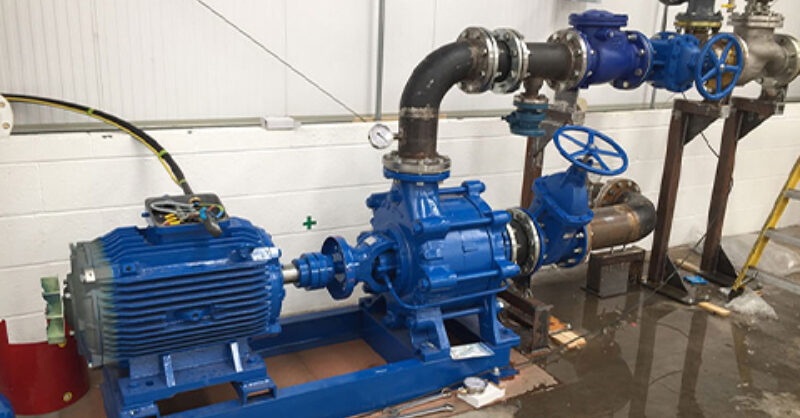
-
The main reasons for low current in multistage centrifugal pumps
Pump Body Component Malfunctions: A Key Checkpoint for Power Output
Faults in multistage pump body components directly alter the motor load. For example, a worn, deformed, or clogged impeller (similar to a damaged "power core") cannot effectively drive the fluid, leading to reduced pump flow and head, decreased motor load, and consequently, reduced current. Furthermore, failed internal pump seals increase leakage, reducing the actual liquid discharge; therefore, the motor does not need to operate at full load, which also results in a decrease in current. Cavitation is another critical factor: when cavitation occurs, the impeller surface is damaged, pump performance deteriorates, flow rate decreases, and motor current decreases accordingly.
Motor and Power Supply Failures: Obstacles in Energy Transmission
Motor failure is a common cause of abnormal current. Short circuits, open circuits, or wiring errors in the motor windings, as well as severe wear of internal mechanical components (such as bearings), can all affect motor operation, leading to abnormally low current. Problems with the power supply system should not be overlooked: insufficient supply voltage, aging wiring, or poor electrical connections can all hinder current transmission, resulting in insufficient input power to the motor and a natural drop in current.
Impeller or flow channel blockage
Impurities or scale in the medium can narrow the impeller flow channel, reducing pump load and decreasing current. For example, in one case, when the scale thickness on the inner wall of the pipe reached 3mm, the current decreased by approximately 15%.
System Coordination Issues: Limiting Factors in the Operating Environment
The proper functioning of a multistage pump depends on the coordinated operation of the entire system. Improper opening of inlet and outlet valves (e.g., inlet valve not fully open or outlet valve too small), or pipe blockages and leaks, can impede fluid flow, reduce flow rate, and consequently decrease motor current. Furthermore, when the pump's head does not match the actual demand-i.e., the actual head is significantly lower than the pump's rated head-the pump will operate under low load conditions, resulting in a drop in current. Changes in the medium's properties (e.g., decreased viscosity or density) can also reduce the pump's load, leading to a decrease in motor current.
-
Troubleshooting methods and operating procedures
For the problem of low motor current in multistage pumps, it is recommended to use a step-by-step troubleshooting method: first check the pump body components (impeller, seals, etc.), then check the status of the system pipelines and valves, and finally test the motor and power cord.
1. Electrical System Inspection
- Use a multimeter to measure the voltage. If the deviation exceeds ±5%, install a voltage regulator.
- Test the motor insulation resistance (should be ≥1MΩ) to rule out winding short circuits.
2. Cleaning and Maintenance
- Disassemble the pump body to remove impurities. If necessary, use a chemical cleaner (such as a 10% citric acid solution) to descale.
- Regularly check the filter to ensure the filter mesh size (usually 80-100 mesh) meets the media requirements.
3. Optimize Operating Conditions
- Adjust the valve opening to control the flow rate within ±10% of the rated value.
- Increase the inlet pressure, such as by adding a filling head or reducing the number of elbows, to ensure the NPSH margin is ≥1.3 times the required net positive suction head (NPSH).
4. Replace Damaged Components
- After replacing the mechanical seal, a static pressure test is required (0.6MPa pressure held for 5 minutes with no leakage).
- If the impeller corrosion exceeds 10% of the wall thickness, the entire impeller must be replaced.
Re-selection and Verification
- Compare actual performance with design parameters using performance curves. If the efficiency is <60%, consider changing the pump model.
- For variable frequency pumps, adjust the frequency to 35-45Hz to match actual requirements.
Successfully troubleshooting multistage pump current anomalies requires a systematic approach that combines technical knowledge, experience, and appropriate tools. By following the guidelines in this manual, we can effectively identify, diagnose, and resolve pump performance issues while minimizing downtime and maintaining operational efficiency.