

Causes and solutions for unstable speed in self-balancing multistage centrifugal pumps
Mar 27, 2026
Leave a message
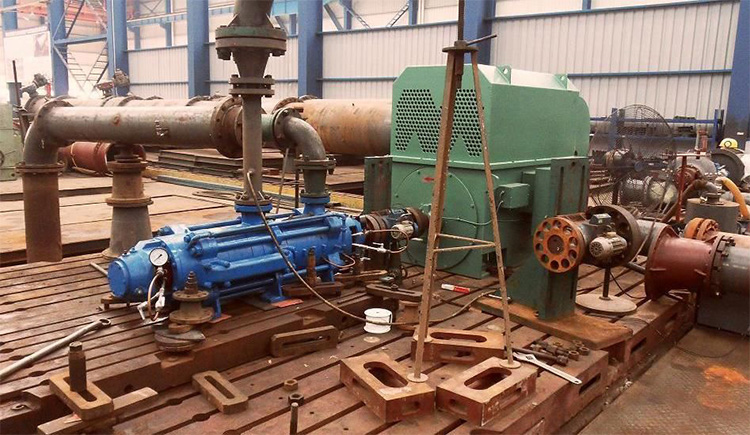
Self-balancing multistage centrifugal pumps are key fluid transport equipment in industrial production and water treatment, and their operational stability directly affects production efficiency, energy consumption, and equipment lifespan. However, in practical applications, unstable speed is one of the most frequent faults, often manifesting as fluctuating flow rates, abnormal motor noise, and soaring energy consumption. This article analyzes the core causes of unstable speed from a professional perspective, providing practical troubleshooting solutions and prevention strategies to help companies mitigate fault risks.
-
Three Core Causes of Unstable Speed in Self-Balancing Multistage Centrifugal Pumps
1. Power Supply System Abnormalities: A Direct Cause of Speed Fluctuations
Pump speed is closely related to power supply voltage and frequency. Abnormalities in the power supply system are the primary factor leading to unstable speed. When the power supply voltage deviation exceeds ±5% of the rated value or the frequency drifts by more than ±1Hz, the motor input power will fluctuate, thus causing abnormal speed. In addition, problems such as poor power line contact, three-phase voltage imbalance, and grid harmonic interference can also lead to motor imbalance, indirectly causing pump speed fluctuations.
2. Fluid and Pipeline Conditions: Indirectly Causing Load Fluctuations
The original statement that "pipeline blockage and flow fluctuations directly affect speed" is not precise enough-these problems actually indirectly cause unstable speed by changing the pump's operating load (especially for variable frequency drive pumps). Specifically, this includes:
Sudden changes in fluid characteristics: such as viscosity exceeding the design range, excessive solids content, or excessive impurities, increasing pump operating resistance;
Abnormalities in the pipeline system: pipeline blockage, sudden changes in valve opening, and check valve malfunction leading to backflow, causing drastic changes in pump load;
Excessive flow fluctuations: sudden changes in downstream demand without timely adjustment cause the pump to operate under non-design conditions, resulting in load imbalance and speed fluctuations.
3. Mechanical component failures: the core hidden danger of operational imbalance
Wear, loosening, or damage to pump body mechanical components can disrupt operational balance, leading to unstable speed:
Bearing system problems: bearing wear, insufficient lubrication, and ball bearing damage lead to increased and uneven operating resistance;
Rotor and impeller failures: impeller wear, corrosion, and scaling cause mass imbalance, or loose impeller fastening bolts;
Other mechanical problems: coupling misalignment, seal wear and leakage, and rotor shaft bending can all lead to operational eccentricity, causing speed fluctuations.
-
Troubleshooting solutions for unstable speed in self-balancing multistage pumps
1. Power Supply System Testing and Optimization
Use a multimeter and power quality analyzer to test voltage, frequency, and three-phase balance. If deviations exceed standards, a high-precision voltage regulator or isolation transformer is required.
Check power line connections for looseness or aging; replace damaged lines promptly to prevent poor contact.
If grid harmonic interference exists, install a harmonic filter to ensure stable motor input power.
2. Fluid and Pipeline Condition Inspection
Test fluid viscosity, solids content, and other parameters. If they exceed design requirements, adjust viscosity through heating/cooling or install a filter to remove impurities.
Inspect pipelines for blockages and valve jamming; clean pipelines promptly and optimize valve opening adjustment methods (avoid sudden opening and closing).
Install a flow transmitter to monitor flow changes in real time and dynamically adjust pump speed using a frequency converter to match downstream demand.
3. Item-by-Item Verification and Maintenance of Mechanical Components
Disassemble and inspect bearings for wear; replace damaged bearings and add appropriate lubricant (grease or oil depending on pump type);
Clean impeller scale and check wear; if impeller is unbalanced, perform dynamic balancing; tighten loose bolts;
Check coupling alignment accuracy; correct deviations using a dial indicator; replace aged seals; repair bent rotor shafts.
4. Control System Parameter Optimization
If the pump is equipped with a frequency converter, have professionals optimize VFD parameters (such as acceleration/deceleration time, PID control coefficient) to avoid excessive speed response fluctuations;
Check the control system sensors (such as pressure and flow sensors) for proper functioning; calibrate signal transmission accuracy to ensure accurate control commands.
5. Installation of Targeted Protection Devices
Install overcurrent protectors, thermal relays, and undervoltage protectors to automatically cut off power or adjust operating status in case of overload, undervoltage, or other abnormalities;
In critical operating conditions, install pressure buffer tanks and flow stabilizing valves to mitigate pipeline pressure shocks and reduce the impact of load fluctuations on speed.
6. Establish a dynamic monitoring mechanism
Install online vibration sensors and speed monitors to collect operational data in real time and issue timely alarms upon detecting abnormalities;
Develop an inspection plan, regularly record parameters such as speed, flow rate, and pressure, and create an operational log to facilitate tracing the root cause of faults.
-
Measures to prevent unstable speed of self-balancing multistage centrifugal pumps from the source
1. Strengthen Power Supply System Management
Use dedicated power lines to avoid sharing lines with high-power equipment and reduce voltage fluctuation interference.
Regularly test power grid quality, conducting voltage, frequency, and harmonic tests quarterly, and promptly address any potential issues.
2. Standardize Fluid and Pipeline Management
Optimize fluid pretreatment processes, reducing solids content through filtration and sedimentation to ensure viscosity, temperature, and other parameters meet pump design requirements.
Regularly clean pipelines, check valves and check valves to prevent blockages or leaks that could cause sudden load changes.
3. Implement Regular Maintenance
Establish maintenance cycles according to the pump's instruction manual: check bearing lubrication monthly, perform impeller cleaning and dynamic balancing every six months, and conduct a comprehensive disassembly and overhaul annually.
Establish an inventory of vulnerable parts (such as bearings, seals, and impellers), replacing aging components promptly to avoid operating with defects.
4. Scientific Selection and Installation
Select a suitable self-balancing multistage centrifugal pump based on actual operating conditions (flow rate, head, fluid characteristics) to avoid over-engineering or operation beyond the design range;
During installation, strictly control the alignment accuracy of the coupling and the flatness of the foundation to ensure stress-free pipeline connections and reduce operational imbalances caused by installation errors.
Unstable speed of a self-balancing multistage centrifugal pump is not uncontrollable. The key lies in accurately identifying the cause, promptly investigating and addressing it, and mitigating risks at the source through scientific preventative measures. By standardizing power supply management, optimizing operating conditions, strengthening mechanical maintenance, and implementing precise control systems, the pump's stable operation can be ensured, its energy-saving advantages can be maximized, and production and maintenance costs can be reduced.