

Why do self-balancing pumps need regular inspection and maintenance?
Sep 16, 2025
Leave a message
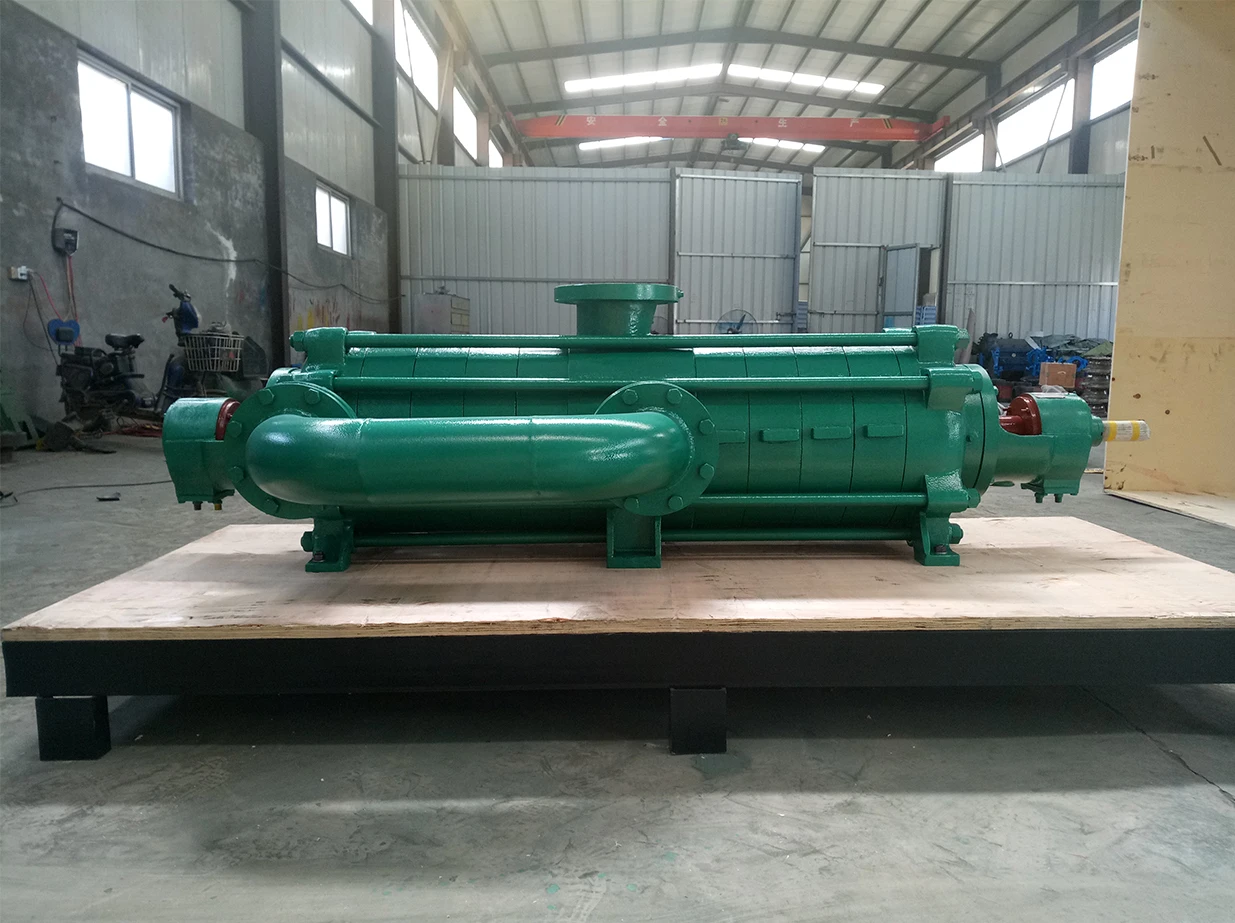
As a highly efficient, non-balancing multi-stage pump, the stable operation of a self-balancing pump relies on precise structural coordination and adaptability to complex operating conditions. Its complex structure and harsh operating conditions necessitate regular inspection and maintenance to offset medium damage, maintain structural accuracy, and prevent sudden failures, ultimately achieving stable operation, ensuring production safety, and reducing overall costs.
1. Offsetting the continuous damage of the medium to the core components
Self-balancing pumps are mostly used to transport complex media such as corrosive, particle-containing, high-temperature and high-pressure media (such as chemical slurries, salt water, steam condensate, etc.). These media will cause continuous damage to the key components of the pump:
(1) Corrosion
Acids, alkalis, salt solutions and other media will cause electrochemical or chemical corrosion to metal parts such as impellers, pump casings, and shaft sleeves, causing pitting, cracks, and even perforation on the surface of the parts (such as "intergranular corrosion" of stainless steel by chloride ions), affecting the sealing performance and hydraulic efficiency of the pump.
(2) Wear and blockage
Media containing solid particles will wash away the impeller blades and flow channels, causing the blades to become thinner and the flow channels to deform, destroying the "self-balancing" characteristics of the pump (the balancing accuracy of the symmetrically arranged impeller); at the same time, particles may accumulate at the impeller inlet and the sealing gap, causing increased pump vibration and abnormal increase in current.
(3) High temperature aging
High-temperature media will accelerate the aging and hardening of seals (such as the dynamic/static rings and O-rings of mechanical seals), causing seal failure and medium leakage.
At the same time, high temperature will reduce the viscosity of the lubricating oil, affect the lubrication of the bearings, and may cause the bearings to overheat and burn out. Regular inspections can detect these damages in time (such as the degree of corrosion of the impeller and the aging state of the seals) and prevent the expansion of the fault by repairing (such as welding the impeller) or replacing parts (such as wear-resistant impellers and high-temperature resistant seals).
2. Maintaining the Stability of the Core "Self-Balancing" Performance
The core advantage of a self-balancing pump is that it achieves self-balancing axial forces through the symmetrical arrangement of the impeller and intermediate sections, eliminating the need for the balancing discs of traditional multi-stage pumps. However, its balancing performance depends on the precise coordination of all components:
1. If a mass deviation occurs in one impeller stage due to wear or corrosion (e.g., uneven weight), or if shaft deflection or excessive bearing clearance occurs due to long-term operation, the impeller's symmetrical balance will be disrupted, resulting in axial force imbalance, causing severe pump vibration and even friction and collision between the impeller and the pump casing.
2. If the assembly accuracy (e.g., concentricity) of static components such as the midsection and guide vanes becomes loose due to vibration, it will alter the flow path, reduce the pump's hydraulic efficiency, and even exacerbate local turbulence and wear.
3. Regular maintenance (such as measuring shaft radial runout, checking impeller balancing accuracy, and re-tightening midsection bolts) can promptly correct these deviations, ensuring the effectiveness of the "self-balancing" mechanism and preventing chain failures caused by imbalance.
3. Ensure production continuity and safety, reducing overall costs
Avoid unplanned downtime: Self-balancing pumps are often critical equipment in the production process. Sudden downtime due to component damage will interrupt media delivery and cause subsequent processes to stall (e.g., interruption of chemical reaction materials, cessation of water circulation in the heating system), resulting in production losses. After downtime, the media in the pipeline may crystallize or solidify (e.g., solidification of high-temperature slurry after cooling), requiring additional manpower to clean up before resuming production.
Prevent safety accidents: Media leaks (e.g., corrosive media) can cause equipment corrosion, personal injury, and even fire and explosion (e.g., flammable and explosive media). Excessive pump vibration, if not promptly addressed, can cause fractures in the pump and pipeline connections, expanding the scope of the accident.
Extending equipment life: Minor faults (such as slight leaks, abnormal bearing noise, etc.) will gradually deteriorate into major faults (such as shaft breakage, pump casing cracking, etc.) if left untreated. Repair costs will soar from a few hundred yuan (replacing seals) to tens of thousands of yuan (replacing the entire machine). Regular maintenance through "early detection and early repair" can significantly extend the overall life of the equipment and reduce long-term investment.