

What are the reasons for the excessive axial clearance of the bearings in double-suction split case centrifugal pumps?
Aug 29, 2025
Leave a message
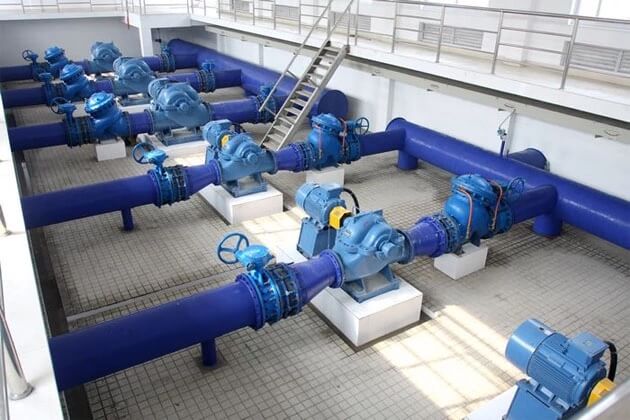
Due to its unique structural design, double-suction split-case centrifugal pumps offer advantages in balancing axial forces, resulting in lower axial forces than conventional multistage pumps. However, achieving a complete balance of axial forces in both directions is often difficult in actual operation. Especially during liquid transportation, fluctuations in parameters such as flow rate and pressure can cause significant changes in axial force, making shaft play a significant issue. Excessive bearing play is generally most likely due to component misalignment during installation, but many other factors can also contribute. Below, we will detail the causes and solutions for excessive bearing play in double-suction split-case centrifugal pumps.
1. Unlocking the Bearings
Bearings play a critical supporting role in the operation of centrifugal pumps. If the bearings are not tightened, they cannot provide stable positioning for the shaft, resulting in excessive axial play. There are various reasons for bearing lockup, including quality issues with the bearing itself, such as damage to the bearing locking mechanism. Alternatively, the bearing cover may become loose, causing the bearing to gradually shift out of position during operation.
Solution: First, thoroughly inspect the bearings, carefully checking the integrity of the bearing locking mechanism and the rolling elements, raceways, and other components for wear or deformation. Also, check the tightness of the bearing cover. If any looseness is detected, tighten the relevant bolts promptly to ensure the bearing is securely mounted on the pump shaft.
2. Improper operation, operating conditions outside the pump's design range
Centrifugal pumps are designed for specific operating ranges, including parameters such as flow rate, head, and speed. In actual operation, if the operator does not follow these design requirements, such as arbitrarily adjusting valve openings or changing the properties of the pumped medium, the pump's operating conditions will deviate from the designed range. If the operating conditions deviate significantly, the pump's internal hydraulic balance will be disrupted, generating additional axial forces and causing excessive bearing axial clearance.
Solution: Operators must strictly follow the pump's operating procedures and closely monitor the pump's operating parameters to ensure it operates within the designed operating range. When adjusting parameters such as flow rate, use the correct method to avoid drastic changes in operating conditions. Regular operator training should also be provided to enhance their operational skills and understanding of the impact of changing operating conditions.
3. Balancing Issues
Double-suction split case centrifugal pumps are typically equipped with a balancing device to balance axial forces. The balancing pipe is a crucial component of the balancing device. Its function is to direct the high-pressure liquid at the pump outlet to components such as the balancing disc, thereby balancing the axial forces. If the balancing pipe becomes clogged or leaks, the balancing device will not function properly, resulting in poor balancing. This, in turn, prevents effective axial force balance and causes excessive bearing axial clearance.
Solution: Regularly inspect and clean the balancing pipe to ensure it is unobstructed. Check all connections for tightness and leaks. If leaks are detected, replace the seals or repair the pipe promptly. Additionally, install a filter on the balancing pipe to prevent impurities from entering and causing blockage.
4. The material of the balancing plate and balancing plate seat does not meet the requirements.
The balancing plate and balancing plate seat are key components of the balancing device. They rub against each other during operation and bear a certain amount of axial force. If their material does not meet the requirements, such as insufficient hardness, wear resistance, or strength, they will wear rapidly during operation, thereby compromising the balancing effect of the balancing device and causing excessive axial clearance in the bearings.
Solution: Replace the balancing plate and balancing plate seat with materials that meet the requirements. When selecting materials, choose materials with sufficient hardness, wear resistance, and strength, such as high-quality cast iron or alloy steel, based on factors such as the pump's operating pressure and the properties of the pumped medium. Also, ensure that the replaced balancing plate and balancing plate seat are precision-machined to ensure accurate fit and performance.
5. Unlevel Bearing Installation
The levelness of bearing installation is crucial to the proper operation of a centrifugal pump. If the bearings are not installed level, the pump shaft will tilt, resulting in uneven load distribution on the bearings, increased bearing wear and axial play. Long-term operation can seriously reduce the bearing lifespan and lead to a series of failures.
Solution: Correct the levelness of the double-suction pump bearings. Use a level or other tool to measure the levelness of the bearing seat. Based on the measurement results, adjust the bearing level by adjusting the shims at the bottom of the bearing seat, etc., to ensure that the bearings meet the required levelness. Repeated measurement and adjustment are required during the correction process to ensure that the bearing levelness error is within the allowable range.
In summary, excessive axial clearance in the bearings of double-suction split-case centrifugal pumps is a problem that requires attention, and its causes involve multiple aspects. During actual operation and maintenance, pump inspection and maintenance should be strengthened to promptly identify and address various problems to ensure normal operation of the pump and extend its service life.