

Difference between single stage centrifugal pump and multistage centrifugal pump. When to use a multistage pump instead of a single stage pump?
Feb 19, 2025
Leave a message
Multistage pumps and single-stage pumps are two common types of water pumps. The core differences between them lie in their structural design, head capacity and application scenarios. The following is a detailed comparison and selection suggestions:
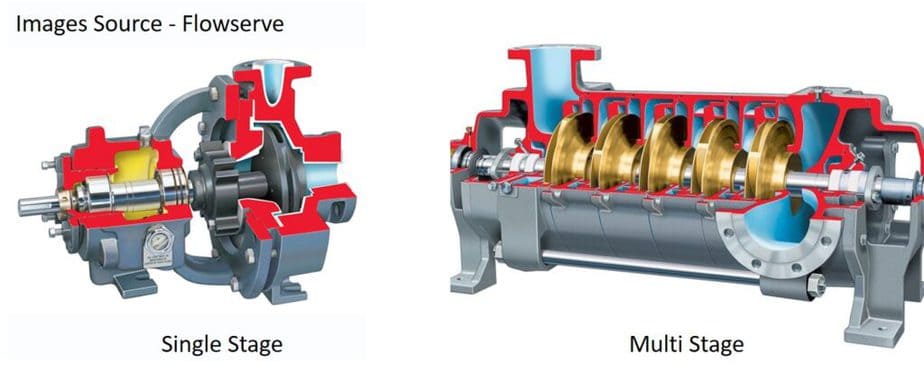
- Difference between single stage centrifugal pump and multistage centrifugal pump:
Single-stage pump: A single-stage pump refers to a pump with only one impeller. The general single-stage pump has a maximum head of only 125 meters. It has the advantages of simple structure, stable performance, high speed, small size, light weight, high efficiency, large flow, easy operation and maintenance.
Multistage pump: Multistage pump consists of multiple impellers connected in series. Each impeller processes the liquid and passes it to the next stage, thereby accumulating pressure. The maximum head can exceed 300 meters. It is suitable for applications that require high head, such as high-rise water supply, deep well pumping, boiler water supply, industrial high-pressure system, etc.
- When to choose a multistage pump?
The core advantage of a multistage pump is high-pressure output, which is suitable for the following scenarios:
High head requirements
Such as: water supply to high-rise buildings (more than 20 floors), deep well pumping (more than 100 meters), mine drainage, and boiler high-pressure water supply.
High system pressure requirements
Occasions where stable high pressure is required in industrial processes, such as oil pipeline boosting and chemical reactor feeding.
Energy saving requirements (specific working conditions)
When the system head requirements far exceed the capacity of a single-stage pump, the multistage pump is more efficient in the high-pressure section, avoiding the energy loss of multiple single-stage pumps in series.
- When choosing a single-stage pump?
Single-stage pumps are suitable for low to medium head, large flow, and low-cost scenarios:
Civilian water supply: household tap water boosting, small irrigation.
Industrial circulation: cooling water circulation, low-pressure industrial processes.
Cost-effectiveness priority: when the budget is limited or maintenance conditions are limited.