

Operating principles and maintenance guidelines for boiler feed water pumps
Aug 18, 2026
Leave a message
A boiler feed water pump is a critical component in steam generation systems. Its primary function is to deliver treated feed water to the boiler at the required flow rate and pressure, overcoming the boiler pressure and hydraulic losses in the feed water system.
Unlike ordinary water transfer pumps, boiler feed water pumps often operate under high pressure, elevated temperature, continuous-duty conditions, and strict reliability requirements. Improper pump selection, insufficient NPSH, poor operating practices, or inadequate maintenance can result in cavitation, vibration, reduced efficiency, mechanical seal failure, or even unexpected boiler shutdowns.
This guide explains the working principle, major components, pump types, operating requirements, maintenance practices, and common troubleshooting methods for boiler feed water pumps.
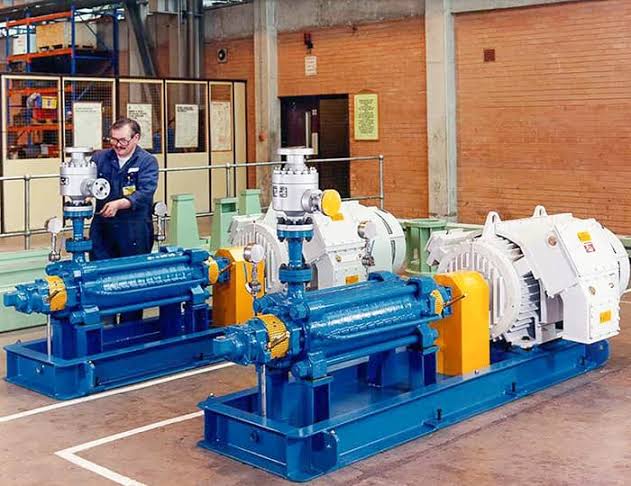
1. What Is a Boiler Feed Water Pump?
A boiler feed water pump is a high-pressure pump designed to transfer treated water from a feedwater tank, deaerator, or condensate system into a steam boiler.
The pump must generate sufficient head to overcome:
Boiler operating pressure
Static elevation difference
Feed water pipeline friction losses
Valve and fitting losses
Pressure losses through heaters and other equipment
Required pressure margin at the boiler inlet
The basic function can therefore be summarized as:
Feedwater Source → Boiler Feed Pump → Feedwater System → Steam Boiler
The reliability of the pump directly affects the continuous operation of the boiler system.
If the feedwater supply becomes insufficient, the boiler water level may fall below the required operating range. In industrial steam systems, this can lead to reduced steam production, overheating of boiler components, process interruption, or safety-related shutdowns.
For this reason, boiler feed pumps are normally treated as critical-duty equipment rather than general-purpose water pumps.
2. How Does a Boiler Feed Water Pump Work?
Most industrial boiler feed water pumps are centrifugal pumps, particularly multistage centrifugal pumps for medium- and high-pressure applications.
The operating principle is based on converting mechanical energy from the driver into hydraulic energy.
Step 1: Feedwater Enters the Pump
Treated feedwater is normally supplied from a deaerator, feedwater tank, or other pressurized water source.
Because boiler feedwater may be hot, the suction conditions must be carefully evaluated to ensure that the pump has sufficient Net Positive Suction Head Available (NPSHA).
Step 2: The Impeller Adds Energy to the Water
The motor or other driver rotates the pump shaft and impeller.
As the impeller rotates, centrifugal action increases the velocity and energy of the water.
Step 3: Hydraulic Components Convert Velocity into Pressure
The high-velocity water passes through a diffuser or guide vane, where part of its velocity energy is converted into pressure energy.
In a multistage pump, this process is repeated through multiple impellers and stages.
Step 4: Pressure Builds Through Multiple Stages
Each stage contributes additional head.
Therefore, a multistage centrifugal pump can achieve a much higher discharge head than a comparable single-stage pump while maintaining a relatively compact hydraulic design.
Step 5: High-Pressure Water Enters the Boiler
The pump delivers the required feedwater flow at a pressure higher than the boiler pressure, allowing water to enter the boiler continuously.
3. Why Are Multistage Pumps Commonly Used for Boiler Feed Applications?
Boiler systems often require substantially higher pressure than ordinary water supply applications.
A single-stage centrifugal pump may be sufficient for low-pressure boiler systems, but higher-pressure applications generally require a multistage configuration.
A multistage centrifugal pump contains multiple hydraulic stages arranged in series.
The approximate relationship is:
Total Pump Head ≈ Head per Stage × Number of Stages
Actual performance depends on the pump's hydraulic design, operating point, fluid properties, and efficiency.
The main advantages of multistage boiler feed pumps include:
High pressure/head capability
Stable continuous operation
High hydraulic efficiency
Suitable for high-pressure boiler systems
Flexible stage selection
Good suitability for industrial applications
For this reason, horizontal multistage centrifugal pumps and other high-pressure multistage configurations are widely used in industrial boiler feed systems.
4. Main Components of a Boiler Feed Water Pump
A boiler feed pump consists of several critical components. The exact configuration depends on the pump design, pressure, temperature, and application.
4.1 Impeller
The impeller is responsible for transferring mechanical energy to the fluid.
Its hydraulic design affects:
Flow rate
Pump head
Efficiency
Power consumption
Cavitation performance
For high-temperature or high-pressure applications, impeller material selection is particularly important.
4.2 Diffuser or Guide Vane
The diffuser or guide vane converts part of the water's kinetic energy into pressure energy.
Its hydraulic design strongly influences the efficiency of each pump stage.
Poor hydraulic matching can increase internal losses and reduce overall pump efficiency.
4.3 Pump Shaft
The shaft transfers mechanical power from the driver to the impellers.
For high-speed and high-pressure pumps, shaft:
Strength
Rigidity
Alignment
Material selection
Dynamic balance
are important factors affecting reliability.
4.4 Bearings
Bearings support the rotating shaft and maintain the correct rotor position.
Abnormal bearing temperature or vibration may indicate:
Insufficient lubrication
Excessive loading
Misalignment
Shaft problems
Bearing wear
Rotor imbalance
Regular monitoring is therefore essential.
4.5 Mechanical Seal or Packing
The shaft sealing system prevents water from escaping along the rotating shaft.
Depending on pump design and operating conditions, the pump may use:
Mechanical seals
Packing seals
Specialized high-temperature sealing arrangements
For hot boiler feedwater, seal selection must consider temperature, pressure, fluid properties, and operating conditions.
4.6 Pump Casing
The casing contains the hydraulic components and withstands the internal pressure generated by the pump.
For high-pressure boiler feed applications, casing strength, pressure rating, material, and thermal performance must be considered during pump design.
5. Key Operating Parameters of a Boiler Feed Water Pump
Selecting a boiler feed pump requires more than simply matching a motor power rating.
The following parameters should be considered.
5.1 Flow Rate
The required flow rate is generally determined by:
Boiler evaporation capacity
Steam production
Blowdown rate
System losses
Feedwater system configuration
Operating margin
The pump should be selected according to the actual required operating range rather than simply choosing the largest available flow.
5.2 Pump Head
The pump must generate enough head to overcome the total dynamic requirements of the feedwater system.
The required pump head can include:
Required Head = Static Head + Pressure Head + Friction Losses + Equipment Losses + Safety Margin
The exact calculation should be based on the actual system design.
5.3 Feedwater Temperature
Boiler feedwater is often significantly hotter than ordinary water.
As water temperature increases, its vapor pressure also increases.
This directly affects the available NPSH and therefore the pump's cavitation margin.
High-temperature feedwater requires careful evaluation of:
- NPSHA
- NPSHR
- Suction pressure
- Water temperature
- Pump installation elevation
- Suction pipeline losses
6. NPSH and Cavitation: A Critical Consideration
One of the most important issues when operating a boiler feed pump is cavitation.
Cavitation occurs when local pressure inside the pump falls below the liquid's vapor pressure, causing vapor bubbles to form and subsequently collapse in higher-pressure regions.
Typical consequences include:
- Noise
- Vibration
- Reduced flow
- Reduced head
- Impeller erosion
- Bearing damage
- Mechanical seal problems
NPSHA vs. NPSHR
Two terms are particularly important:
NPSHA - Net Positive Suction Head Available
This represents the NPSH provided by the actual system.
NPSHR - Net Positive Suction Head Required
This represents the minimum NPSH required by the pump under a specified operating condition.
For reliable operation:
NPSHA should be greater than NPSHR by an appropriate engineering margin.
For boiler feedwater applications, this becomes particularly important because the water may be hot and close to its saturation condition.
A pump that works normally with cold water may experience serious cavitation when operating with high-temperature feedwater if the suction conditions are not properly designed.
7. Boiler Feed Pump Startup Procedure
Correct startup is essential for protecting the pump.
The exact procedure should always follow the pump manufacturer's operating manual and the plant's operating procedures.
A typical centrifugal boiler feed pump startup sequence includes:
1. Check the Pump and Motor
Before starting, inspect:
Coupling
Lubrication
Bearings
Mechanical seal
Valves
Instrumentation
Foundation and anchor bolts
2. Confirm the Pump Is Filled With Liquid
A centrifugal pump should not be operated dry.
Ensure that the pump casing and suction line are properly filled and that air has been removed where required.
3. Check Suction Conditions
Confirm that:
Suction valve is correctly positioned
Feedwater source is available
Suction pressure is adequate
NPSH conditions are acceptable
4. Confirm Correct Rotation
Verify the motor rotation direction according to the pump manufacturer's requirements.
Incorrect rotation can result in insufficient hydraulic performance and may damage the equipment.
5. Start the Pump
Start the pump according to the manufacturer's recommended valve and control sequence.
Avoid prolonged operation at conditions outside the permitted operating range.
6. Monitor Operating Parameters
Immediately after startup, check:
- Discharge pressure
- Flow rate
- Bearing temperature
- Vibration
- Motor current
- Seal leakage
- Abnormal noise
Any significant abnormality should be investigated before continuous operation.
8. Why Should a Boiler Feed Pump Not Run at Very Low Flow?
Operating a centrifugal boiler feed pump continuously at extremely low flow can cause serious hydraulic and mechanical problems.
Possible consequences include:
- Internal recirculation
- Temperature rise
- Hydraulic instability
- Increased vibration
- Bearing loading
- Seal damage
- Reduced pump life
For critical applications, the system may require a minimum-flow protection system or recirculation line.
The minimum continuous stable flow should be determined according to the specific pump design and manufacturer's performance data.
This is an important consideration that is sometimes overlooked during system design.
9. Boiler Feed Water Pump Maintenance
Preventive maintenance is essential for maintaining pump reliability.
A practical maintenance program should include the following areas.
9.1 Monitor Vibration
Increasing vibration may indicate:
Rotor imbalance
Misalignment
Bearing wear
Cavitation
Foundation problems
Hydraulic instability
Trend monitoring is often more useful than looking at a single measurement.
A gradual increase in vibration can provide an early warning before a major failure occurs.
9.2 Monitor Bearing Temperature
Abnormal bearing temperature may be caused by:
Insufficient lubrication
Excessive lubrication
Bearing damage
Misalignment
Excessive radial or axial load
Temperature trends should be compared with the manufacturer's recommended limits.
9.3 Inspect Mechanical Seals
Check for:
Excessive leakage
Abnormal temperature
Seal face damage
Seal flushing problems
Contamination
A small amount of leakage may be normal for certain sealing arrangements, while excessive or sudden leakage requires investigation.
9.4 Check Lubrication
Use only the lubricant specified by the pump manufacturer.
The maintenance schedule should consider:
Operating speed
Bearing type
Temperature
Lubricant type
Operating hours
Manufacturer recommendations
Over-lubrication can be just as harmful as insufficient lubrication.
9.5 Inspect Coupling and Alignment
Pump and motor alignment is particularly important for high-speed equipment.
Misalignment can lead to:
Increased vibration
Bearing failure
Coupling wear
Shaft problems
Mechanical seal failure
Laser alignment equipment can be used where appropriate to improve alignment accuracy.
9.6 Inspect Impellers and Wear Components
During scheduled maintenance, inspect the hydraulic components for:
Erosion
Corrosion
Scaling
Wear
Cavitation damage
Deposits
Changes in pump performance can sometimes indicate internal wear even before visual inspection.
10. Common Boiler Feed Pump Problems and Troubleshooting
Problem 1: Pump Discharge Pressure Is Too Low
Possible causes include:
- Incorrect pump speed
- Wrong rotation direction
- Excessive internal wear
- Impeller damage
- Clogged suction line
- Insufficient suction pressure
- Excessive system resistance
- Air entering the pump
- Operation outside the design point
Recommended checks:
- Verify pump speed.
- Confirm rotation direction.
- Check suction pressure and flow.
- Compare actual performance with the pump curve.
- Inspect the impeller and internal clearances.
- Check for air ingress.
Problem 2: Excessive Vibration
Possible causes include:
Misalignment
Bearing damage
Rotor imbalance
Cavitation
Foundation problems
Pipe strain
Operation outside the recommended range
Do not automatically replace the bearing without investigating the root cause.
Repeated bearing failure is often a symptom rather than the original problem.
Problem 3: Pump Is Noisy
Common causes include:
Cavitation
Air entrainment
Bearing damage
Hydraulic instability
Excessive flow
Insufficient suction pressure
If the noise resembles gravel or stones passing through the pump, cavitation should be investigated immediately.
Problem 4: Excessive Seal Leakage
Possible causes include:
Damaged mechanical seal
Shaft runout
Misalignment
Incorrect seal installation
Excessive vibration
Incorrect seal flushing conditions
Seal replacement should be combined with root-cause analysis.
Problem 5: Motor Overload
Possible causes include:
Excessive flow
High fluid density
Pump operating outside its design point
Mechanical friction
Bearing problems
Incorrect pump selection
Motor current should be monitored together with flow, pressure, and pump operating conditions.
A boiler feed water pump is a critical part of a steam generation system. Its performance affects not only water supply to the boiler but also the reliability, efficiency, and continuity of the entire steam system.
For high-pressure industrial applications, multistage centrifugal pumps are often an effective solution because they can generate the required head through multiple hydraulic stages.
However, reliable operation depends on more than the pump itself. Correct pump selection, adequate NPSH, proper startup, minimum-flow protection, alignment, lubrication, seal management, vibration monitoring, and preventive maintenance all contribute to long-term performance.
Need a boiler feed water pump for your industrial application? Contact HNYB PUMPS with your flow rate, head, temperature, and boiler pressure requirements for a technical recommendation.