

Effect of Altitude on Centrifugal Pump Systems
Mar 11, 2025
Leave a message
Centrifugal pumps are widely used in the transportation of various liquids, accounting for about 70% to 80% of the total number of pumps. In plateau environments, atmospheric pressure decreases with increasing altitude, and the pressure at the centrifugal pump suction port decreases accordingly. The decrease in suction capacity affects the normal operation of the pump and leads to reduced work efficiency. This article will analyze the working performance and changing rules of centrifugal pumps at different altitudes, as well as solutions.
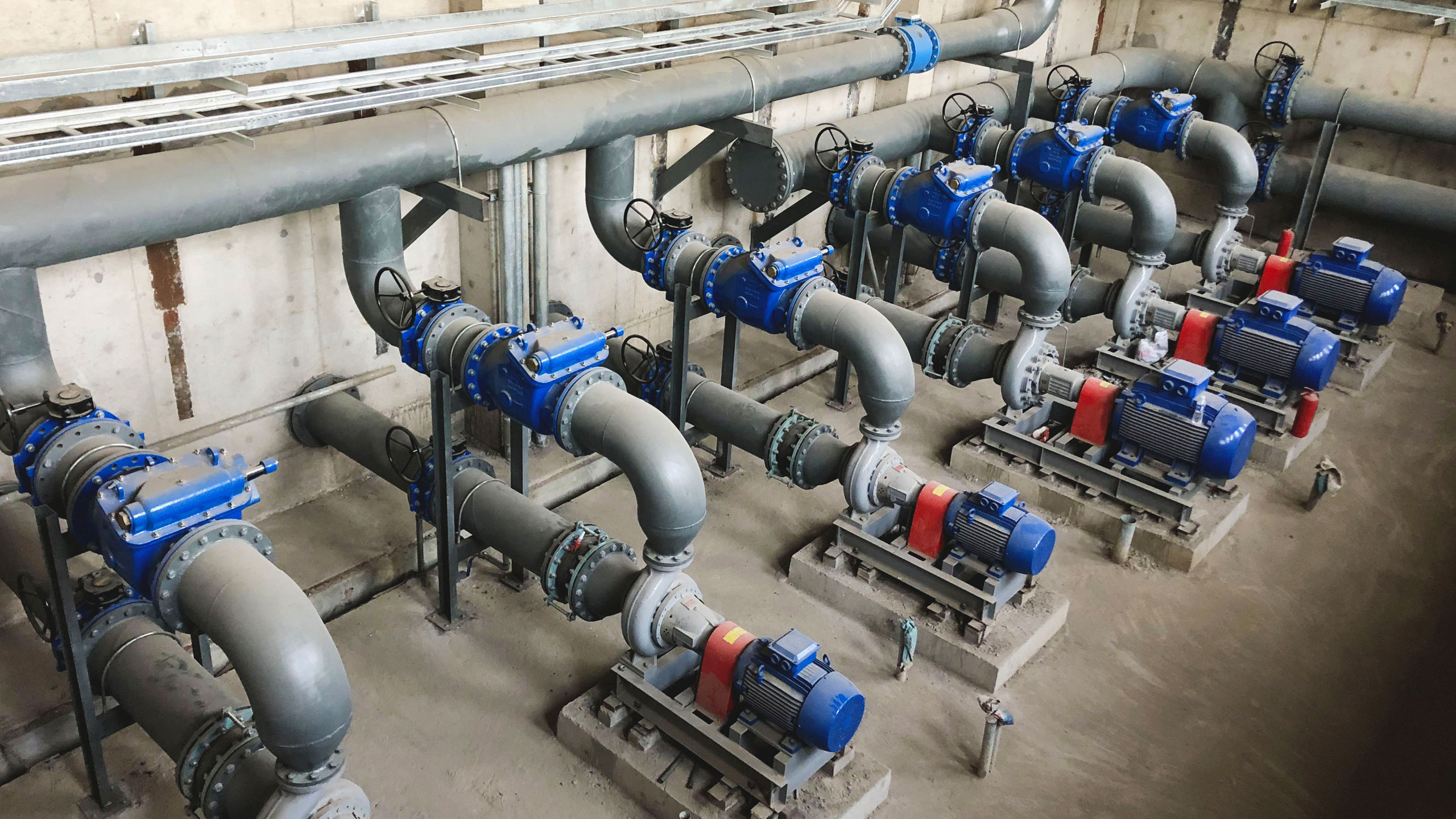
- Basic principles of water pump suction
The suction of a water pump essentially comes from the difference between atmospheric pressure and the vacuum pressure in the pump. Under standard atmospheric pressure (about 101.325 kPa at sea level), the theoretical maximum water suction height of a water pump is 10.33 meters. In practical applications, due to factors such as friction loss and cavitation, the effective suction distance usually does not exceed 8 meters. The key parameter vacuum directly affects the suction performance. Taking a certain model of centrifugal pump as an example, when the vacuum gauge shows -0.08 MPa, the corresponding theoretical water suction height is about 8.4 meters. During the installation process, special attention should be paid to the vertical distance between the pump shaft and the water source surface. Exceeding the design range will cause a sudden drop in suction.
- Impact of altitude increase on water pump performance
For every 1,000-meter increase in altitude, atmospheric pressure drops by about 12%. Actual measured data from a water conservancy project on the Qinghai-Tibet Plateau showed that the atmospheric pressure at an altitude of 3,800 meters was only 64 kPa, resulting in the effective suction range of the same type of water pump being shortened to 5.2 meters. This nonlinear attenuation relationship can be estimated by the formula h=10.33X(Pactual/Pstandard). Temperature changes exacerbate the impact of altitude. The temperature difference between day and night on the plateau is often more than 20°C. In one case, the suction of a diesel engine-driven water pump dropped by 40% when it was started at low temperature and needed to be preheated to more than 15°C to restore normal working conditions. When selecting supporting equipment, more than 20% performance margin must be reserved.
- Key points for water pump selection in high-altitude areas
Preferably choose the self-priming structure. Comparative tests show that in an environment with an altitude of 2500 meters, the suction range of ordinary centrifugal pumps is attenuated by 35%, while the self-priming pump equipped with a water ring vacuum auxiliary system is only attenuated by 18%. It is recommended that the pump body be placed directly above the water source during installation to minimize the water suction pipeline.
The air resistance effect must be considered in pipeline design. A water delivery project uses a gradually changing diameter pipeline (150 inlet gradually narrows to 100 in the middle), which improves the water absorption efficiency by 22% compared to equal diameter pipelines. During regular maintenance, focus on checking the status of the seals. The aging rate of rubber parts in areas above 3000 meters above sea level is 2-3 times faster than that in plains.
- Solutions to high altitude problems
In response to the problem of insufficient suction, a ranch on the Tibetan Plateau adopted a three-stage relay water-lifting solution: the first-stage deep well pump lifts water to the intermediate water tank, the second-stage centrifugal pump completes vertical lifting, and the final-stage pipeline pump is responsible for horizontal transportation. This combined system enables the total head to exceed the limit of a single pump and successfully solves the problem of livestock drinking water at an altitude of 4,500 meters. Improvement measures to prevent cavitation include: installing a pressure-stabilizing tank at the water inlet and adopting a spiral guide impeller design. Actual measured data show that the NPSH (net positive suction head) value of the modified multi-stage pump at the same altitude is increased by 31%, effectively extending the service life of the equipment.