

Double-suction pump bearing disassembly methods, key points and operation safety guidelines
Jul 17, 2026
Leave a message
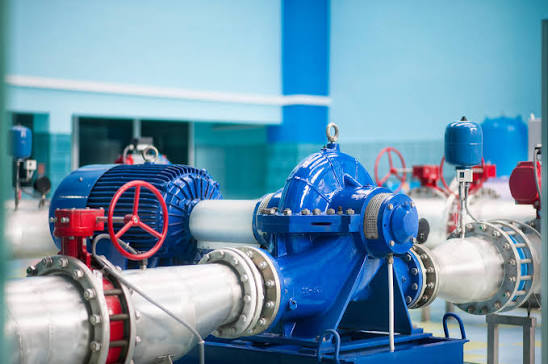
Horizontal single-stage double-suction pumps are key fluid transport equipment in industrial production, water supply and drainage, and other fields, and their stable operation directly affects production efficiency. Bearings, as core transmission components, require timely disassembly and repair when malfunctions occur; precise operation can prevent secondary damage to components. Below, Tianhong Pump Industry, a double-suction pump manufacturer, will explain in detail the bearing disassembly process and precautions for the entire life cycle of the equipment, based on professional maintenance standards.
-
Bearing core disassembly process
Bearing disassembly requires selecting the appropriate method based on the precision of the component fit. The core methods fall into two categories: disassembly from within the end cap hole and direct disassembly from the shaft. During operation, it is crucial to ensure even force distribution and avoid forceful prying or hammering.
Direct disassembly from the shaft: Preferably use a dedicated puller to pull the bearing out axially along the shaft, ensuring the pulling force is perpendicular to the bearing's inner ring to prevent shaft deformation. If a puller is unavailable, a wedge-shaped copper rod (avoid scratching components) can be used. Tilt it against the edge of the bearing's inner ring and evenly tap the copper rod with a hammer, simultaneously moving the rod alternately around the bearing's inner ring to evenly distribute the force circumferentially until the bearing is completely detached from the shaft. Alternatively, two thick iron plates can be used to support the bottom of the bearing's inner ring. A cylinder or bracket adapted to the shaft's diameter can be used to support the shaft, and a thick wooden board or copper plate can be placed on top of the shaft before striking vertically downwards, using the impact force to dislodge the bearing.
Disassembly from the bearing hole in the end cover: In some models, the fit between the bearing hole in the end cover and the outer ring of the bearing is more precise than the fit between the inner ring of the bearing and the shaft. When disassembling the end cover, the bearing may remain inside the hole. In this case, place the end cover with the stop face upwards and place a wooden board around the bearing hole (to avoid direct contact with the bearing). Use a copper or non-metallic rod with a diameter slightly smaller than the outer ring of the bearing, hold it vertically against the upper edge of the outer ring of the bearing, and tap it evenly downwards with a hammer from above to gently remove the bearing from the end cover hole.
-
Essential checks before starting a double-suction pump
Before starting the equipment, a comprehensive inspection must be completed to eliminate potential hazards:
- Manually and slowly rotate the coupling or pulley to confirm that the pump rotation direction matches the equipment markings, that the operation is smooth without jamming, that there are no foreign objects remaining inside the pump chamber, that there is no jamming in the bearings, and that the belt tension is up to standard (neither too loose nor too tight);
- Check that all connecting bolts are tight and that there are no obstructions around the unit that could hinder operation;
- Confirm that the water immersion depth of the suction pipe meets the equipment's operating requirements to avoid dry running;
- If equipped with an outlet valve, close the valve before starting to reduce the starting load, and gradually open it according to the operating procedures after starting.
-
Key Points for Post-Startup Monitoring (Real-time Equipment Status Control)
After equipment startup, continuous monitoring of operating parameters is necessary to ensure stable operation:
- Check the stability and accuracy of all monitoring instruments (ammeters, pressure gauges, etc.). The operating current must not exceed the equipment's rated current range, and pressure gauge readings must be within the design calibration range.
- Observe whether the water pump's output flow rate meets design requirements and check for leaks at all sealing points of the unit.
- Check the sealing condition: The packing seal should be properly compressed, with leakage controlled at 1020 drops per minute; the mechanical seal's leakage should not exceed 10 mL/h (approximately 3 drops/minute).
- Monitor bearing temperature: The temperature of rolling bearings should not exceed 75℃, and the temperature of sliding bearings should not exceed 70℃. Also, pay attention to any abnormal vibrations or noises from the equipment.
- Monitor any abnormal decreases in water output and adjust the inlet pipe's depth accordingly.
- Regularly clean floating debris adhering to the trash rack to prevent blockage of the inlet.
- For belt-driven models, check for belt slippage in real time and adjust the tension as needed.
-
Shutdown and Subsequent Maintenance Precautions (Extending Equipment Lifespan)
Shutdown Procedure: Before shutting down, close the outlet valve and then disconnect the power supply to prevent backflow of water from damaging the internal components of the pump.
Daily Cleaning: After each shutdown, wipe away oil stains from the pump body and pipeline surfaces to keep the unit clean and facilitate timely detection of potential malfunctions.
Winter Protection: When the ambient temperature is below 0℃ in winter, immediately drain any residual water from the pump body after shutdown to prevent freezing and cracking of the pump body and internal precision components.
Long-Term Maintenance: After the operating season ends, a comprehensive maintenance procedure should be performed on the unit, including bearing lubrication, seal inspection and replacement, and component cleaning, to prepare for the next operating cycle.