

Causes of abnormal noise and vibration in self-balancing multistage pumps
Jul 03, 2026
Leave a message
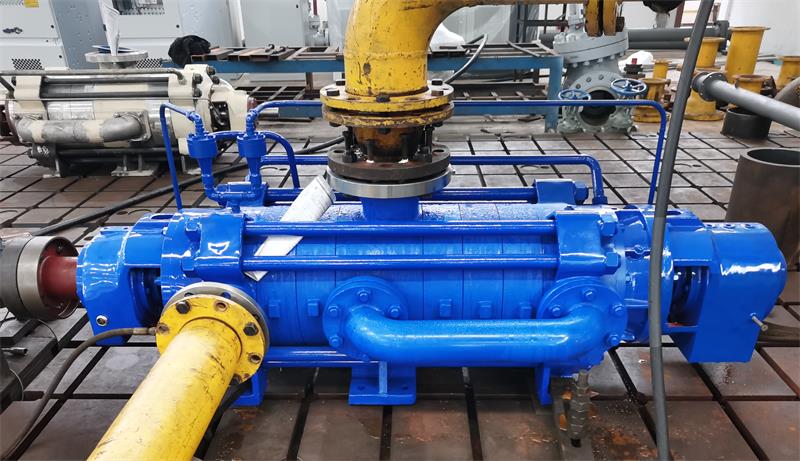
Self-balancing multistage pumps, as core equipment in high-pressure water supply, industrial booster, and building water supply and drainage systems, are characterized by stable operation, high head, no axial force, and long service life, and are widely used in industrial and mining enterprises, municipal engineering, and the water conservancy and water supply industry. However, during long-term continuous operation, the equipment is prone to abnormal vibration and excessive noise due to various factors such as installation deviations, foundation settlement, component wear, non-design conditions, and pipeline stress. If not checked and addressed in time, this will gradually lead to a decline in hydraulic performance, seal leakage, bearing burnout, impeller wear, and other component damage. In severe cases, it may even lead to equipment shutdown and system failure, directly affecting the stable operation of the entire water supply system.
Based on practical experience in the field operation, maintenance, troubleshooting, and commissioning of self-balancing multistage pumps, this article systematically reviews troubleshooting solutions and rectification and optimization techniques for abnormal vibration and noise, providing standardized technical support for the long-term stable operation of the equipment.
-
Causes of abnormal noise and vibration in self-balancing multistage pumps
Precise Vibration Source Location (Dual-Dimensional Detection of Spectrum and Operating Conditions)
Most vibration and noise faults in self-balancing multistage pumps are caused by multiple factors, making precise location difficult through visual inspection alone. Professional detection methods such as vibration spectrum analysis and acoustic localization must be employed, combined with real-time equipment operating data for comprehensive judgment. During operation, key operating parameters such as bearing temperature, motor current fluctuations, and abnormal pump noise should be continuously monitored, with a focus on checking the assembly accuracy of the equipment connection system. Strict control of coupling alignment deviation is crucial; radial and angular deviations must not exceed 0.05mm to avoid mechanical vibration caused by excessive alignment deviations. Simultaneously, a comprehensive check of the preload of anchor bolts is necessary to eliminate low-frequency vibrations caused by loose bolts, uneven stress, and poor connections.
Equipment Foundation Stability Verification and Reinforcement
Insufficient rigidity, settlement, and cracking of the pump concrete foundation, as well as gaps between the embedded steel plate and the foundation, are potential core causes of long-term pump vibration. Professional rebound modulus testing should be performed on the equipment foundation. For conventional C30 concrete foundations, the rebound strength must be no less than 30 MPa to ensure adequate load-bearing capacity. Carefully inspect the bond between the embedded steel plate and the concrete foundation; if the crack width exceeds 0.1 mm, high-pressure grouting must be performed promptly to prevent crack propagation and foundation loosening. For foundations with insufficient rigidity and settlement deformation, secondary grouting reinforcement can be used. Use a non-shrinkage special grouting material with a water-cement ratio controlled between 0.14 and 0.18 to ensure grout density and overall foundation rigidity, and to completely eliminate foundation resonance.
Comprehensive Fault Diagnosis of the Drive System
Abnormal operating conditions of the motor, coupling, and transmission mechanism are significant sources of pump vibration and noise, requiring comprehensive and precise testing and performance verification. For the motor, focus on testing insulation performance and winding parameters: the normal insulation resistance of the equipment should be ≥100MΩ, and the DC resistance deviation between stator winding phases should be ≤2% to avoid electromagnetic vibration caused by inter-turn short circuits and insulation aging. For the coupling, check the keyway wear; when the keyway wear depth is greater than 0.2mm, the entire coupling must be replaced to prevent operational vibration due to excessive transmission clearance. For belt drive structures, accurately measure the deviation of the V-belt pulley groove bottom diameter, controlling the error within 0.1mm to avoid abnormal noise and vibration caused by belt slippage and uneven transmission.
Precision Inspection and Replacement Standards for Core Rotating Components
Wear and precision failure of rotating components such as impellers and bearings are the main internal causes of mechanical noise and high-frequency vibration in self-balancing multistage pumps. As a core wear-resistant component, bearings should be inspected strictly according to national standard clearance values. Taking the commonly used 6205 bearing as an example, the standard clearance range is 0.03~0.06mm. If the measured clearance exceeds twice the national standard value, the bearing must be replaced immediately to prevent vibration caused by bearing stall and eccentric operation. The impeller should undergo dynamic balancing tests regularly, with residual unbalance ≤0.05g·cm, to avoid high-speed rotational vibration caused by impeller eccentricity and oxide scale wear. Simultaneously, the clearance of core components must be strictly controlled: the clearance between the inlet edge of the first-stage impeller and the guide vanes should be maintained at 0.3~0.5mm, conforming to the assembly standards for multistage pump clearance, to avoid hydraulic impact noise and gap vibration.
Optimization of Operating Parameter Matching
Prolonged operation of equipment deviating from its designed high-efficiency operating conditions can lead to hydraulic pulsation, cavitation vibration, and fluid noise, significantly reducing operating efficiency. A variable frequency drive (VFD) system can precisely match the flow-head characteristic curve, ensuring the actual operating point remains within the high-efficiency range, with operating deviations ≤ design parameters ±10%, avoiding adverse conditions such as overload, low pressure, and low-flow pressure maintenance. For conditions with severe pipeline pressure pulsation and high fluid noise, a pressure stabilizing tank with a volume not less than 5% of the pump's rated flow can be installed to effectively offset pipeline pressure fluctuations, eliminate hydraulic resonance and abnormal fluid noise, and optimize equipment operational stability.
Stress and Modal Inspection of Piping System
Stress concentration in pump inlet and outlet pipes, non-standard support arrangements, and pipe resonance can easily transmit vibrations to the pump unit, exacerbating equipment failure. Finite element analysis software was used to perform modal analysis of the pipes, ensuring that the first-order natural frequency of the pipes was greater than 1.2 times the operating frequency of the equipment, thereby completely avoiding pipe resonance. Piping layout strictly followed the GB50316 industry standard: horizontal pipe hanger spacing ≤ 15m, vertical pipe support spacing ≤ 3m, to prevent pipe suspension and stress deformation. Simultaneously, pipe elbow specifications were standardized, with elbow curvature radius ≥ 1.5 times the pipe diameter (D), reducing vibration and noise caused by fluid turbulence and local resistance, and reducing the additional stress of the pipes on the pump body.
Construction of a Graded Preventive Maintenance System
To fundamentally reduce the incidence of vibration and noise failures, a three-tiered standardized maintenance system of daily, weekly, and monthly inspections should be established to enable early prediction and handling of faults. Daily inspections focus on monitoring bearing operating temperature; under normal operating conditions, the bearing operating temperature should be below 75℃ to prevent overheating failure. Weekly inspections measure the vibration value of equipment with motor vibration speeds ≤4.5mm/s to promptly detect minor vibration anomalies. Monthly inspections verify the equipment's anti-cavitation performance; the impeller net positive suction head (NPSH) should be ≥1.1 times the required NPSH to avoid cavitation vibration and erosion damage. For vulnerable core components such as mechanical seals, a double-end sealing structure is preferred, with the flushing fluid pressure 0.1~0.2MPa higher than the pump outlet pressure to ensure stable seal operation and reduce equipment vibration and abnormal noise caused by component failures.
Professional Fault Detection and Remote Technical Support
For persistent vibrations, low-frequency abnormal noises, and potential faults that conventional testing methods cannot resolve, our professional pump industry technical team can perform precise detection. We are equipped with a professional Brewerkea 4396 vibration analyzer, capable of high-precision vibration spectrum analysis and accurate vibration source location. Simultaneously, we employ laser alignment equipment to calibrate transmission accuracy, achieving an alignment precision of ±0.001mm, completely resolving vibration problems caused by misalignment. Furthermore, based on an industrial IoT remote diagnostic platform, we achieve real-time acquisition of equipment operating data and intelligent fault early warning, with a technical response time of less than 2 hours, enabling rapid troubleshooting of various abnormal operating conditions and ensuring stable equipment operation.
Standardized Safety Operating Procedures
All vibration testing, equipment maintenance, and component replacement work must be carried out in strict accordance with safety operating procedures. Before maintenance, a LOTO (Lock-on/Tag-off) energy isolation system must be strictly implemented to completely disconnect the equipment's power supply and media pipelines, eliminating any potential safety hazards caused by residual energy. During the operation, explosion-proof tools with an ExdⅡCT4 explosion-proof rating must be used to adapt to the flammable and explosive industrial working environment. Simultaneously, ISO 4 level professional hearing protection equipment must be worn to control the on-site noise exposure value below 85dB, fully ensuring the personal safety of maintenance personnel and achieving safe and compliant construction.
Intelligent Monitoring and Operation & Maintenance Throughout the Lifecycle
To achieve predictive maintenance and eliminate unexpected failures, a full lifecycle intelligent monitoring system is recommended. High-precision vibration sensors with a sampling frequency of 10kHz and pressure transmitters with a precision of 0.2 class are deployed at key locations on the pump unit to collect core operational data such as equipment vibration, pressure, temperature, and flow rate in real time. A vibration trend database is built based on a SCADA system, and abnormal vibration fluctuation thresholds (acceleration > 80m/s²) are set to achieve automatic early warning of abnormal operating conditions. This upgrades the maintenance mode from passive overhaul to proactive predictive maintenance, significantly reducing equipment failure rates and extending the service life of self-balancing multistage pumps.
In summary, reducing the vibration of self-balancing multistage centrifugal pumps requires a multi-pronged approach, including strengthening foundation installation, optimizing piping systems, and conducting regular inspections and maintenance. Only by comprehensively implementing these measures can the pump's stable operation be ensured, thereby improving its service life and efficiency.